Last updated November 25, 2026



Free roof inspection with deck photos before we talk money - GAF and Owens Corning certified installation
Seasonal Roofing Care for Bellevue: Year-Round Homeowner’s Guide
The most damaging month for a roof in Bellevue isn’t January. It’s November. By then the bigleaf maples have dropped a season’s worth of leaves into gutters that are about to take on peak rainfall, and on shallow-pitch roofs across the Eastside, water backs up under shingles before anyone thinks to look. Bellevue doesn’t run on the four-season model you’ll find in most roofing guides. It runs on two transition windows, October and March, and the work you do in those windows matters more than everything you do in summer and winter combined. This guide walks through the full Bellevue roofing calendar: what to check, when to check it, why bigleaf maple debris behaves differently from conifer needles, and how to use the city’s own tree canopy data to predict what your specific roof is up against.
Quick Answer
Seasonal roof maintenance in Bellevue works best when timed to two windows: October, before the first sustained rain, when you clear debris, check flashing and confirm drainage; and March, before moss spore season, when zinc treatment actually has time to work. Summer and winter tasks matter, but they’re catch-up work. The October and March windows are where you prevent the damage in the first place.
Styles & brands we work with
- Architectural shingles
- Metal roofing
- Tile roofing
- GAF
- Owens Corning
- Flat & low-slope
Table of Contents
- Why Bellevue’s Roofing Calendar Is Different
- The October Pre-Rain Window: A 5-Task Checklist
- Bigleaf Maple Debris vs. Conifer Needles
- March Moss Treatment: Why April Is Too Late
- Summer Tasks Bellevue Homeowners Skip
- Using Bellevue’s Tree Canopy Map to Read Your Roof
- How Roofing Material Changes the Calendar
- Common Mistakes to Avoid
- When to Call a Professional
Why Bellevue’s Roofing Calendar Is Different
Most seasonal roofing advice was written for a climate with four distinct seasons and a long, dry summer. Bellevue doesn’t quite work that way. The region gets most of its rain in a concentrated stretch from fall through early spring, with a long dry window in the middle of the year. That concentrates the damage. A roof doesn’t wear out evenly across twelve months. It takes its hits in a compressed window, and the condition it’s in when that window opens determines how much it suffers.
That’s the core insight behind timing maintenance to October and March. In October, you’re preparing the roof to shed a lot of water in a short time. In March, you’re cleaning up what winter left behind and treating moss before it spreads through the dry months. Skip either window and the roof enters the wet season with a handicap.
There’s a second Bellevue-specific factor: the tree canopy. Bellevue is a city built into a forest, and the neighborhoods vary enormously in how much debris and shade a roof sees. A roof in a heavily wooded part of the Eastside faces a completely different maintenance load than one on an open lot. That’s why generic advice like “clean your gutters twice a year” undersells what some Bellevue roofs actually need.
And there’s the housing stock. Bellevue has everything from mid-century homes with shallow-pitch roofs to newer construction with complex rooflines and multiple valleys. Shallow pitch is the one to watch. Water moves off a low-slope roof more slowly, so debris that would slide off a steep roof lingers, holds moisture, and gives water a path under the shingles. When we talk with Bellevue homeowners about roof replacement, the condition of the low-slope sections is often what tips the decision.
The October Pre-Rain Window: A 5-Task Checklist
October is the most important month on the Bellevue roofing calendar. The goal is simple: get the roof into shape before the first sustained rain of the season, not after. Once the rain settles in, everything gets harder, wetter, and more expensive to fix. Here’s the checklist we walk homeowners through, in order.
- Clear the gutters and downspouts completely. Not a surface skim. Remove the accumulated debris, then flush the downspouts to confirm water actually exits. A gutter that looks clear but has a clogged downspout is worse than a full gutter because it gives you false confidence.
- Check the roof surface for debris dams. Look at the valleys, behind chimneys, and anywhere the roof changes pitch. That’s where leaves and needles pile up and hold water against the shingles.
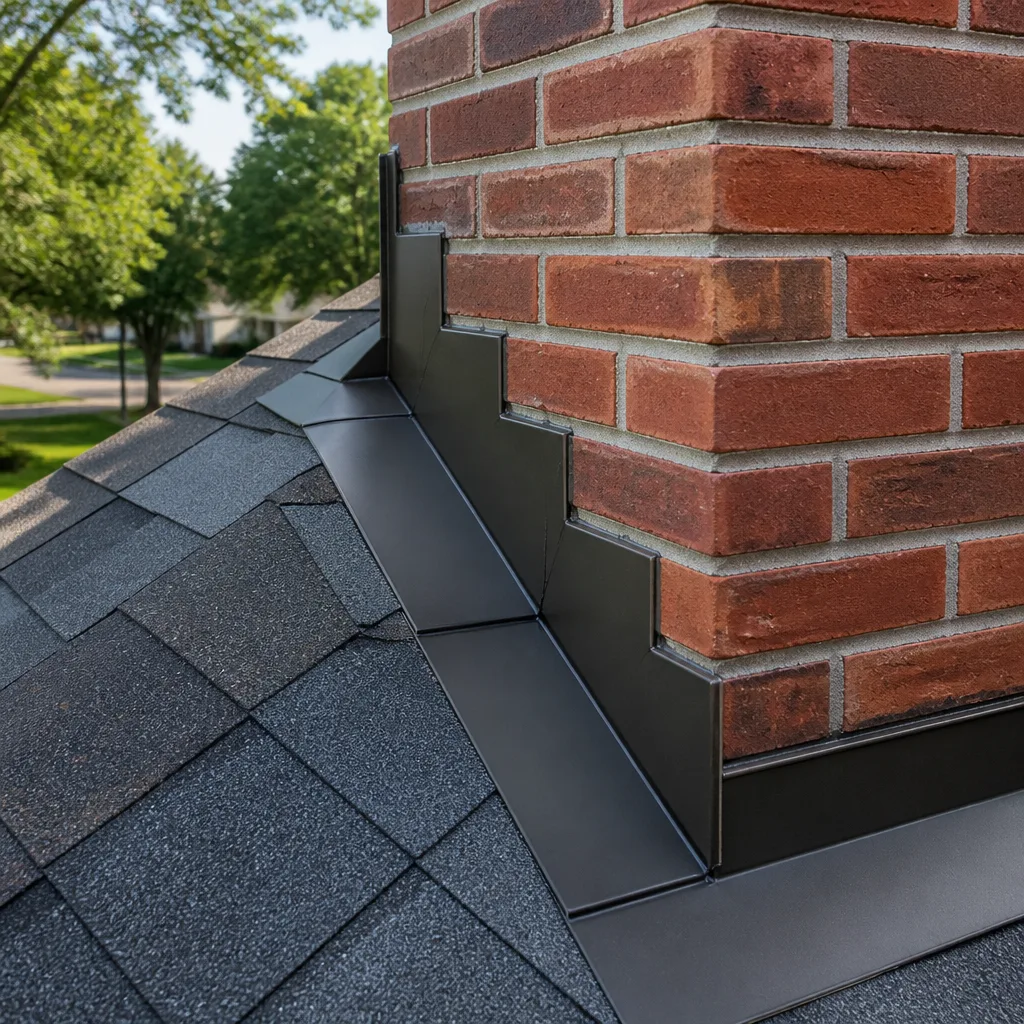
- Inspect the flashing. Flashing around chimneys, skylights, vents and wall intersections is where most leaks begin. Look for lifted, cracked or separated flashing and deteriorated sealant. This is the single highest-value check in the October window.
- Look at the attic and ceilings for early signs. Before the rain, note any existing staining, then check again after the first heavy rain. New staining after a storm tells you exactly where water is getting in.
- Trim back overhanging branches. Branches that touch or hover over the roof drop debris continuously and abrade the surface in wind. A few feet of clearance makes a real difference through the wet months.
The timing matters more than the tasks. If you wait until the gutters are already overflowing in November, you’re doing reactive work in the worst conditions. If you do it in October, you’re doing preventive work in reasonable weather. The difference in outcome is significant, and it’s the reason we tell Bellevue homeowners to put this window on the calendar rather than waiting for a problem to announce itself.
What “First Sustained Rain” Actually Means
You don’t need a precise date. Watch the forecast for the first stretch of steady, multi-day rain rather than a single passing shower. That’s your trigger. Aim to have the checklist done in the one to two weeks before it. The window is forgiving, but it closes fast once the rain settles in.
Bigleaf Maple Debris vs. Conifer Needles: Two Different Problems
Bellevue homeowners tend to lump all tree debris together. It’s a mistake, because bigleaf maple debris and conifer needles create different hazards and need to be handled differently.
Bigleaf maples drop large, broad leaves. Those leaves are heavy and they mat. A mat of wet maple leaves in a gutter or valley forms a near-solid barrier that holds water against the roof surface and blocks drainage entirely. The failure mode is sudden: the gutter fills, water backs up under the shingles at the eaves, and it shows up inside before anyone notices the cause. Maple leaves also break down relatively quickly, which means they turn into a dense, moisture-retaining sludge that clogs downspouts even after the visible leaves are gone.
Conifer needles behave differently. They’re small and they interlock. A layer of needles doesn’t mat the way leaves do, but it does create a fine, water-absorbing blanket that holds moisture against the roof surface for long periods. Needle accumulation is more of a slow, persistent problem: it keeps the roof damp, promotes moss and algae growth, and degrades the surface gradually. It’s also much harder to clear completely because the needles work into every seam and crevice.
What this means in practice:
- Maple-heavy neighborhoods need aggressive, well-timed gutter clearing and valley checks right at the October window, because the failure is fast and dramatic.
- Conifer-heavy neighborhoods need more frequent, patient surface clearing and closer attention to moss and moisture, because the damage is gradual but relentless.
- Mixed canopy is the most demanding: you get both the fast-clogging leaves and the persistent needle layer, and the needle layer traps the leaves so the matting happens faster.
Knowing which trees actually overhang your roof is the first step. Most Bellevue homeowners know the big trees by sight but haven’t thought about how their debris behaves. If you’re not sure what’s landing on your roof, a professional inspection will tell you, and it’s worth doing before you commit to a maintenance rhythm. When debris and moisture have gone unmanaged long enough to compromise the decking, we may be looking at new roof installation rather than maintenance, and it’s better to know that clearly than to keep patching.
March Moss Treatment: Why April Is Too Late
Moss is the defining maintenance issue for roofs in Bellevue, and the single biggest timing mistake homeowners make is treating it in spring after it’s already visibly active. By April, you’ve missed the window that matters.
Here’s the sequence. Moss releases spores when conditions warm and moisten, which in Bellevue means early spring. If you apply a zinc treatment in March, before spore release, you interrupt that cycle and the treatment has time to work through the wet spring. If you wait until April, the spores have already spread, and the treatment is now fighting an active, established problem instead of preventing one.
Zinc treatment works by a simple mechanism: as rain hits a zinc strip or a zinc-based product, trace amounts of zinc wash down the roof surface and create an environment where moss can’t establish. That’s why it’s preventive in nature. It works best on a clean roof, before moss takes hold, and it needs to be in place before spore season, not after.
- Clear existing moss first. Zinc won’t fix moss that’s already thick. It needs to be physically removed, gently, without damaging the shingle granules.
- Apply the preventive treatment in March. This gets the zinc in place ahead of spore release and gives it the spring moisture it needs to disperse.
- Confirm drainage is clear. Moss and moisture go together. Clearing the gutters in the same visit addresses the conditions moss loves.
- Note heavily shaded areas. Moss establishes first where the roof stays shaded and damp. Those areas tell you where to focus going forward.
We’ve seen enough Bellevue roofs to know that the March window is the one that pays off year after year. Treating in March is maintenance. Treating in April or May is catch-up, and it usually costs more to get the same result. If moss has been a recurring problem, it’s worth having a professional look at the roof and confirm the treatment is being applied where it’s actually needed.
Summer Tasks Bellevue Homeowners Skip Because the Roof Looks Fine
The dry months are when Bellevue roofs look their best, and that’s exactly why maintenance gets skipped. Nothing is leaking, nothing looks wrong, so nothing gets checked. But summer is when you can actually see two things that are quietly degrading, and both are easier to address before the wet season returns.
Attic Ventilation
Attic ventilation is the task most homeowners never think about until there’s a problem. A roof needs to breathe. Without adequate intake and exhaust ventilation, heat and moisture build up in the attic through the summer, and that has two effects. The heat stresses the roofing materials from below, accelerating their breakdown. The trapped moisture, which is more of a concern during the wet months, has nowhere to go and can condense on the underside of the roof deck.
In summer, the check is straightforward. Look at the attic on a hot day. If it’s noticeably hotter than the outside air, ventilation is likely inadequate. Confirm that intake vents at the soffits aren’t blocked by insulation and that exhaust vents are open and clear. Ventilation problems are rarely urgent, but they shorten the life of whatever roofing material you have, and they’re much easier to correct in dry weather.
UV Flashing Degradation
Flashing takes the full force of summer sun, and the sealants around it degrade under UV exposure faster than most people expect. By the time the rain returns, a sealant that looked fine in June can be cracked and separating. Summer is when you can see and correct that. Check the flashing around chimneys, skylights and vents, and look at any exposed sealant for cracking, lifting or separation. Repairing it in dry weather is cleaner and more reliable than trying to seal a wet surface in the fall.
This is the quiet value of the summer check. You’re not fixing anything dramatic. You’re catching the wear before it turns into a leak. A well-installed roof gives you that window, which is why the material and installation quality behind it matter. When we discuss shingle roofing, we talk about the flashing details as much as the field shingles, because that’s where roofs actually fail.
Using Bellevue’s Tree Canopy Map to Read Your Specific Roof
Bellevue maintains a city tree canopy map, and it’s one of the most useful tools a homeowner can use to plan roof maintenance. It shows tree canopy coverage across the city, which tells you something specific: how much debris and shade your roof is likely to see, and therefore how much maintenance it actually needs.
Here’s how to use it in practice:
- Look up your address on the city’s canopy map. Note the density of canopy directly over and immediately adjacent to your roof, not just the general neighborhood.
- Translate canopy density into maintenance frequency. Heavy canopy over the roof means more frequent gutter clearing and closer attention to valleys. Light canopy means the standard timing windows are usually enough.
- Cross-reference with shade. The same canopy that drops debris also shades the roof, and shade is what lets moss establish. A heavily shaded roof needs the March moss treatment more than an open, sun-exposed one.
- Check which trees are involved. Maple, conifer or mixed tells you which debris problem you’re managing, which changes how you clear and how often.
This is the part of Bellevue roofing that most guides skip entirely, because most guides aren’t written by anyone who works here. A roof on a wooded lot in the Eastside and a roof on an open lot in the same city are not the same maintenance job, and the canopy map lets you see which one you have without guessing. It’s a small amount of research that saves you from either over-maintaining or, more dangerously, under-maintaining.
We’ve used this approach with Bellevue homeowners to set realistic expectations. The roof that needs quarterly gutter clearing and the roof that needs it twice a year both look the same from the ground. The canopy map and an inspection tell you which is which.
How Roofing Material Changes the Seasonal Calendar
The Bellevue calendar applies to every roof, but the details change with the material. Since we install all three major residential roofing materials, we can tell you honestly how the maintenance rhythm shifts.
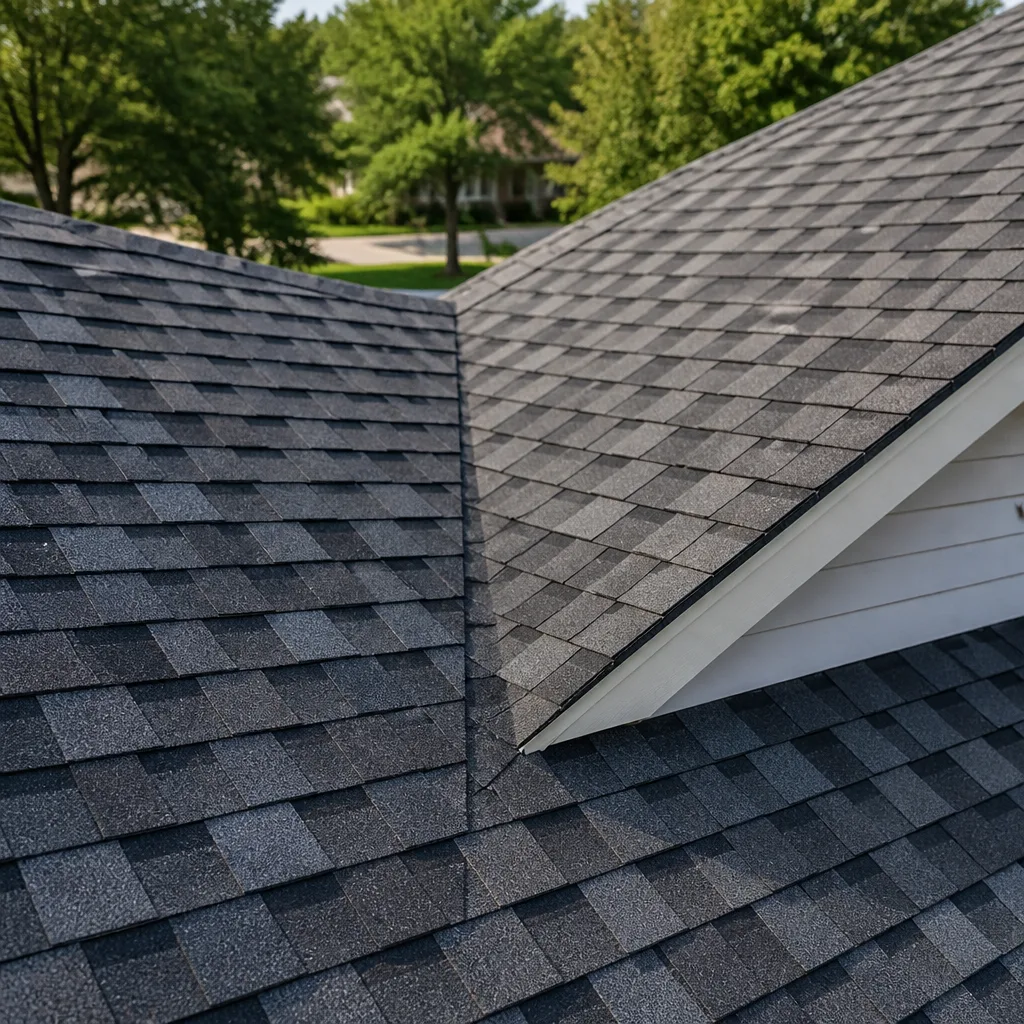
Asphalt shingles are the most common choice and the most forgiving, but they’re vulnerable to moss and algae in the damp months and to granule loss over time. The March moss window matters most here, and the October debris window is where you protect the shingles from standing moisture. Manufacturers like CertainTeed, Owens Corning and IKO all make shingle lines with varying performance, and the maintenance needs track the product as much as the material.
Tile roofing holds up well against moisture but has its own seasonal considerations. Tile surfaces can collect debris in the channels, and moss can establish between tiles. It also values regular inspection, since a cracked or shifted tile is easy to miss and gives water a path underneath. Tile is a long-lived material but not a maintenance-free one.
Metal roofing handles debris and moisture differently, with a smoother surface that sheds leaves and needles more readily. But metal still needs its fasteners and flashing checked, and in heavy canopy areas the debris can build up against penetrations. Metal is durable, but it still benefits from the same two timing windows.
Whichever material is on your roof, the calendar is the same. The difference is in what you look at and how often. A shingle roof wants the closest moss attention; a tile roof wants the closest inspection for damaged pieces; a metal roof wants the closest eye on its fasteners and flashing.
If your roof is approaching the end of its useful life or the maintenance burden keeps growing, we can help you weigh the options. We source from manufacturers like GAF, CertainTeed, Owens Corning, IKO, Atlas, Tamko and Boral, so a recommendation is based on what fits your roof and budget, not on a single brand. Roofing Bellevue Pros handles the full range, and we talk plainly about the trade-offs.
Common Mistakes to Avoid
- Waiting until the gutters overflow to clear them. By the time you notice, you’re already in the November failure window. Clear them in October, before the first sustained rain, not after.
- Treating moss in April or May. The March window is when zinc treatment can interrupt the spore cycle. Treating after the moss is already active means you’re fighting an established problem instead of preventing one.
- Assuming a clean-looking roof needs no summer check. Ventilation and flashing degrade quietly in the dry months. A roof that looks fine can still have failing sealant and blocked attic vents.
- Clearing maple leaves the same way you’d clear needles. Maple leaves mat and clog suddenly; needles hold moisture slowly. Handling them the same way means missing one of the two problems.
- Ignoring the low-slope sections. Shallow-pitch roofs in Bellevue are where water backs up first. They need closer debris attention than a steep roof, not less.
- Doing gutter and roof work yourself at height. Roof work means ladders, edges and fall exposure. If you’re not set up to work safely up there, the risk outweighs the savings.
- Guessing at your exposure instead of checking. The city canopy map and a professional inspection tell you what your specific roof faces. Generic advice doesn’t account for the trees actually over your house.
When to Call a Professional
Most of the seasonal checklist is work a careful homeowner can handle from the ground: noting the trees, watching the gutters, checking the attic on a hot day, looking at the ceiling after a storm. But some situations call for a trained eye and someone set up to work safely at height. If your October check turns up flashing that’s lifted or separated, if you see moss established across a significant part of the roof, if you find staining on the underside of the deck or the ceilings, or if the roof is old enough that maintenance is no longer the right question, it’s time to get a professional assessment. Roofs are also a safety issue when they involve height and edges, so anything that means spending real time up on the surface is a job for someone equipped for it.
Roofing Bellevue Pros offers free estimates in Bellevue – call (425) 699-1466. We answer 24/7. Fast dispatch from 7am to 7pm, Sunday through Friday. We’ll walk the roof with you, tell you honestly what the calendar should look like for your house, and if the maintenance rhythm isn’t enough anymore, we’ll lay out the options across shingle, tile and metal with a written line-item estimate.
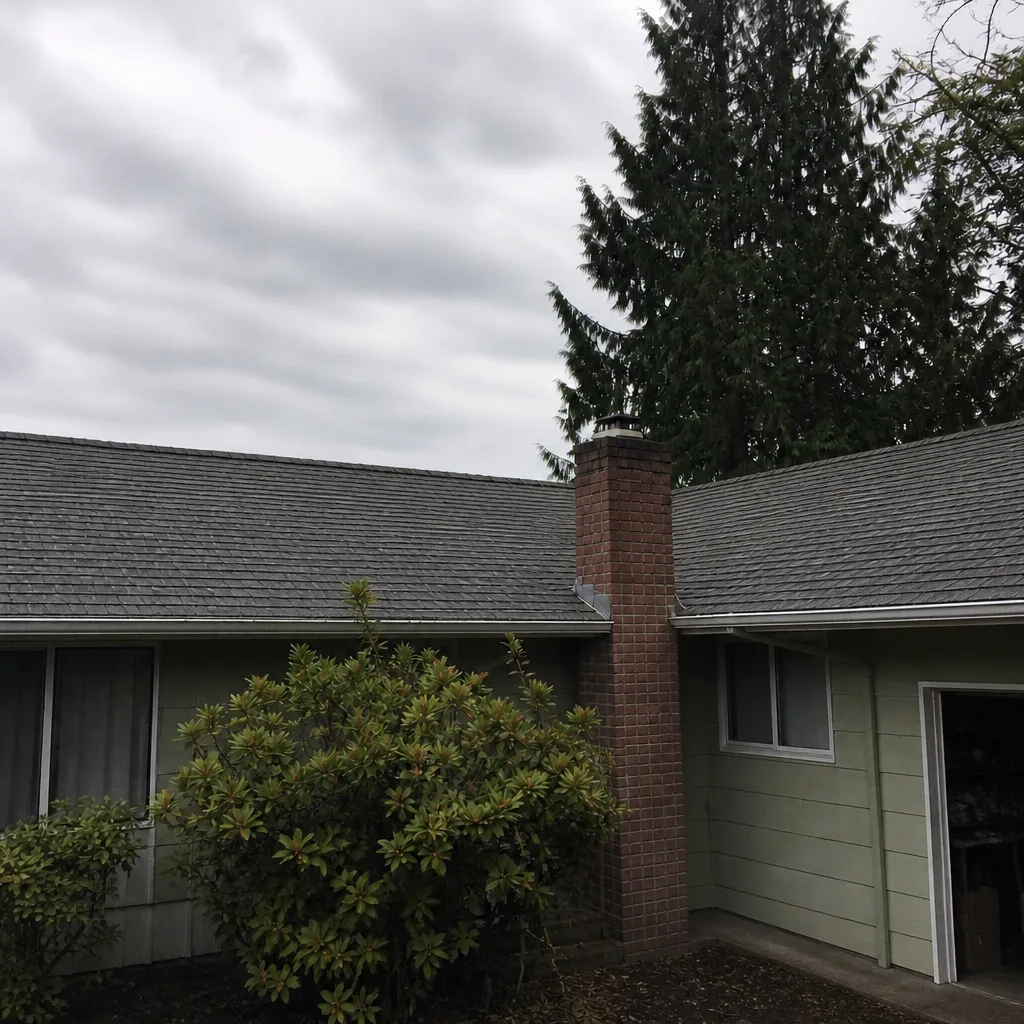
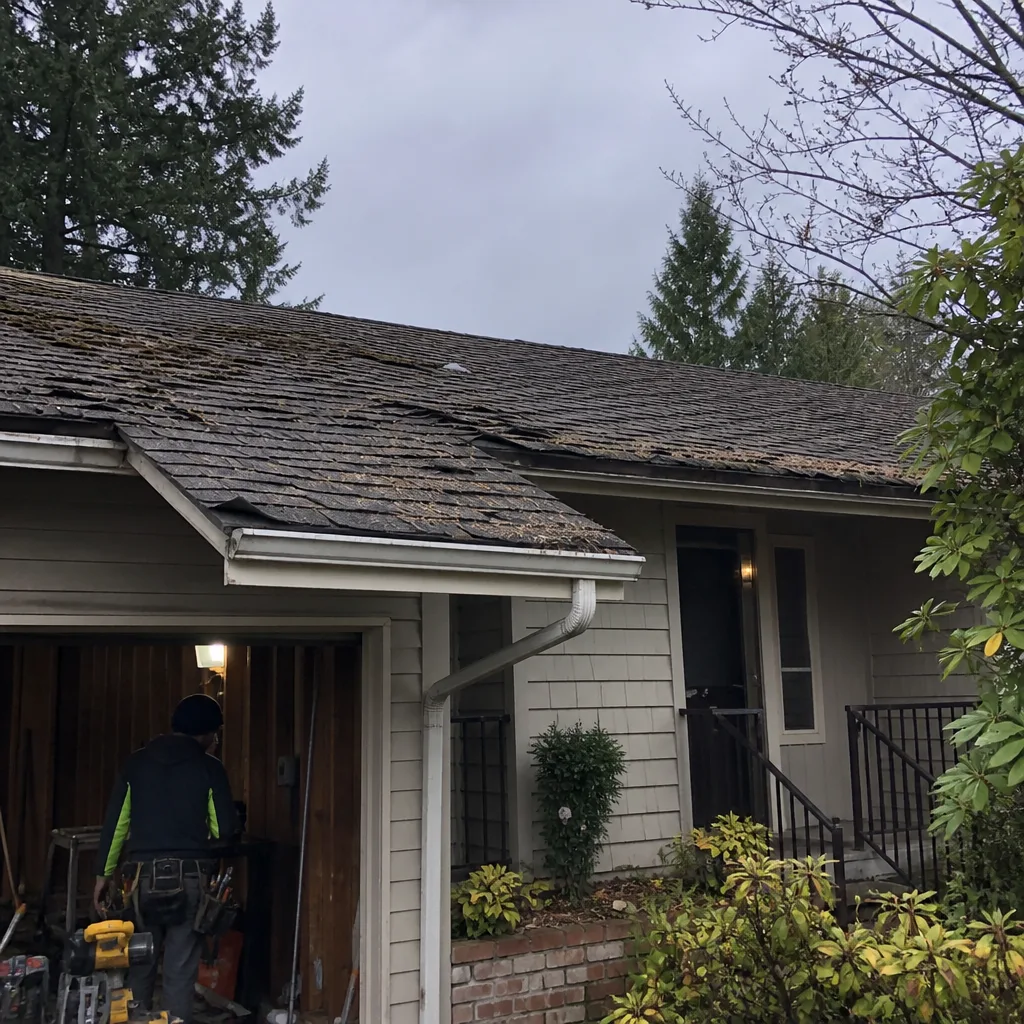
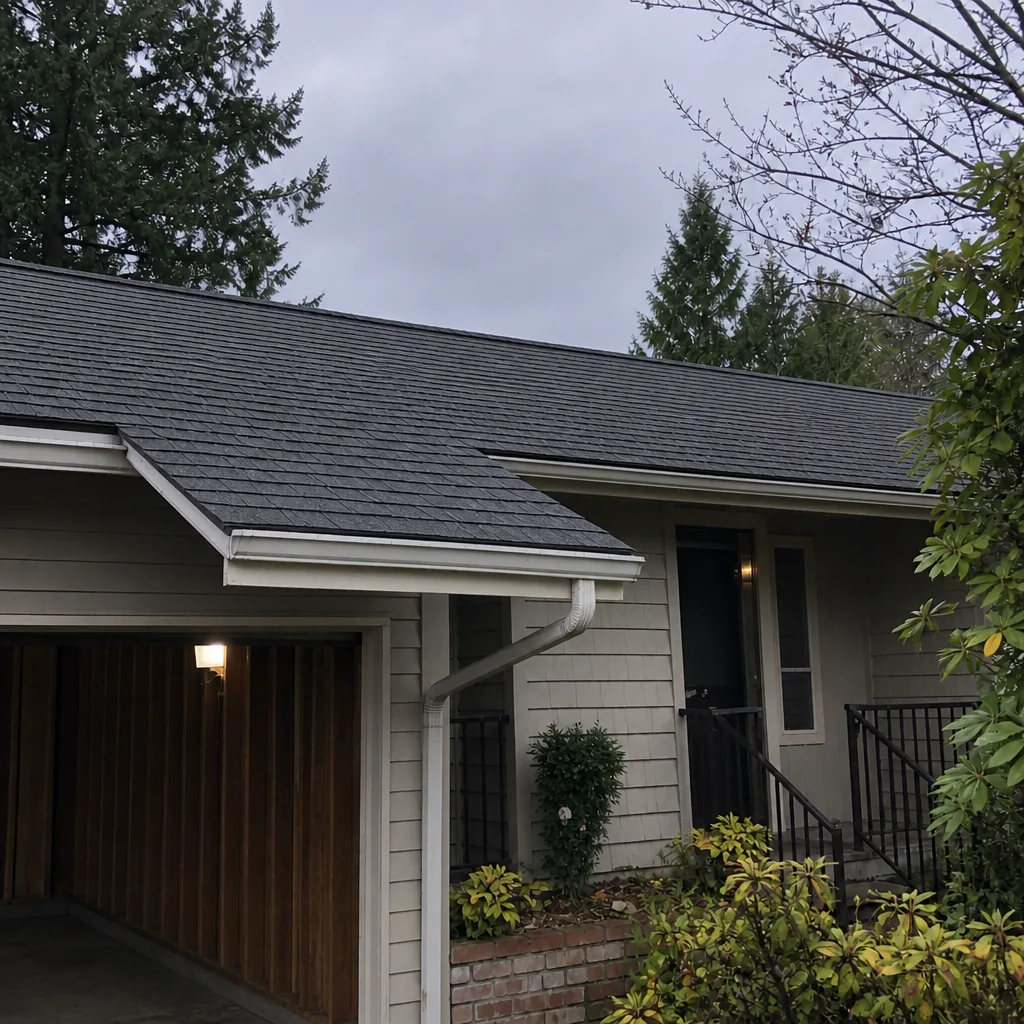
See the difference
 Before
 After
 Before
 After
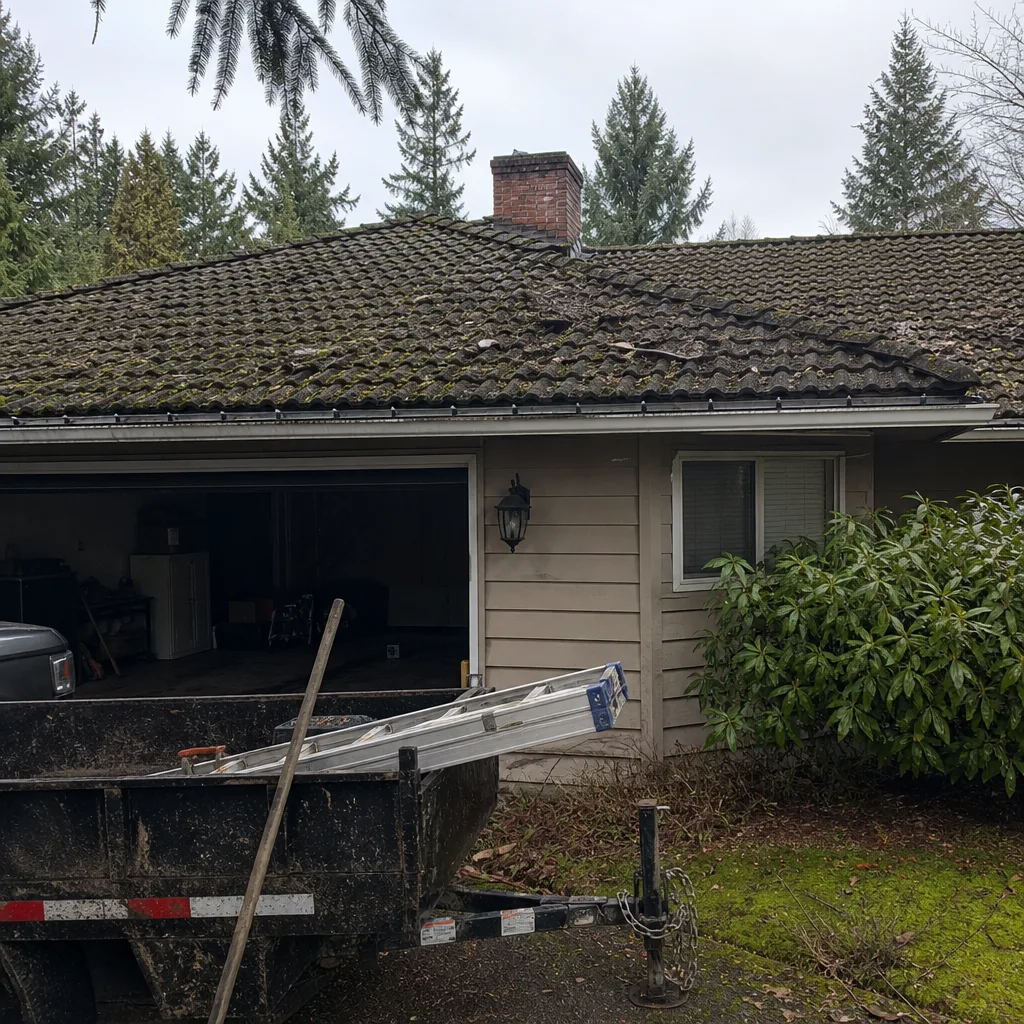 Before
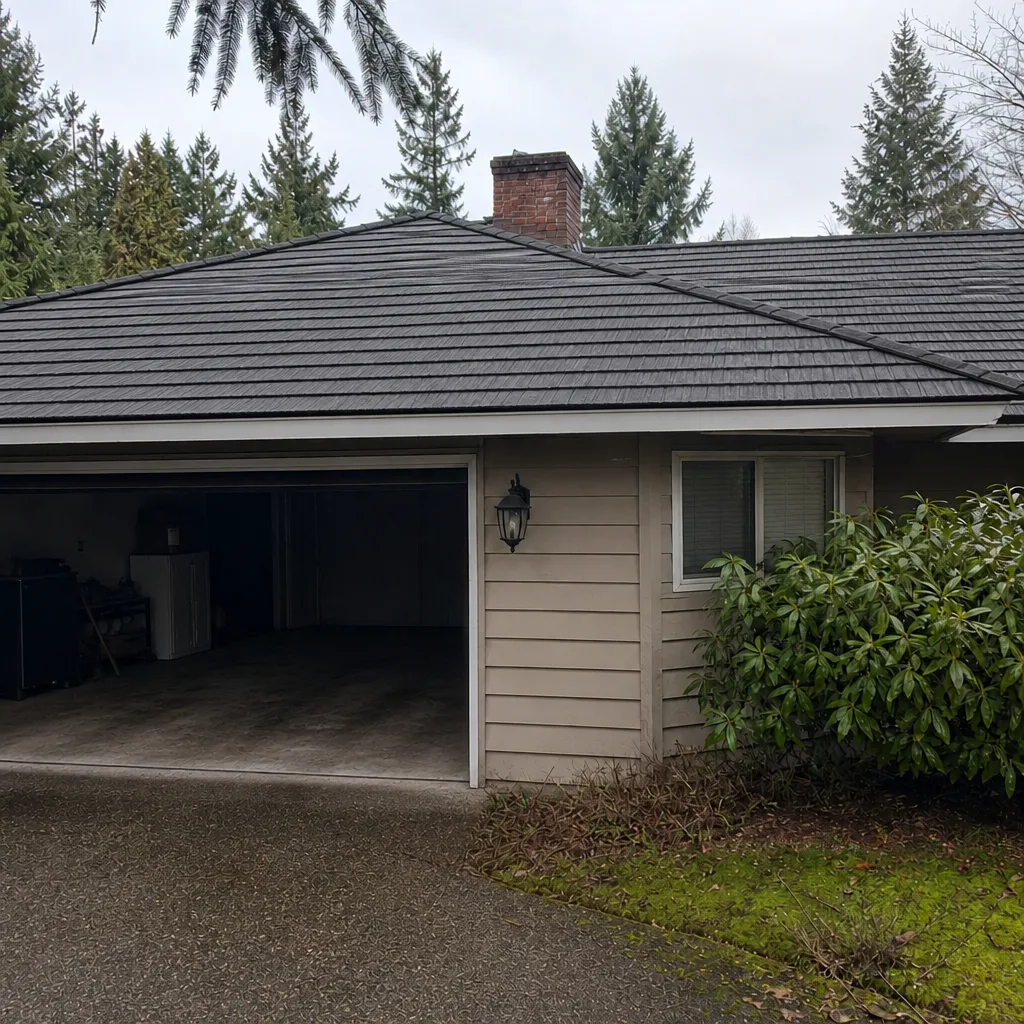 After
Frequently Asked Questions
The two most important windows are October, before the first sustained rain, and March, before moss spore season. October is for clearing debris and checking flashing; March is for removing moss and applying preventive zinc treatment. Summer and winter work is secondary. If you can only manage two maintenance visits a year, make them these two.
November is when bigleaf maple leaves have filled the gutters right as rainfall peaks. On shallow-pitch roofs, that combination causes water to back up under the shingles before most homeowners notice anything. The damage is concentrated in a short window, which is why the October pre-rain checklist matters so much.
By April, moss has typically already released spores, so the treatment is fighting an active problem rather than preventing one. Zinc treatment works best when applied in March, ahead of spore release, so it has time to disperse through the wet spring. Waiting until April usually costs more to get the same result.
Yes. Maple leaves are large, heavy and mat together, which clogs gutters and traps water suddenly. Conifer needles interlock and hold moisture against the roof gradually, promoting moss and quiet surface damage. A roof under mixed canopy gets both problems at once, which is the most demanding case.
Start with the city’s tree canopy map and look up your address. Canopy density over and adjacent to your roof tells you how much debris and shade you’re dealing with, which sets the maintenance frequency. A roof under heavy mixed canopy needs considerably more than one on an open lot. An inspection confirms it.
Yes. Summer is when two quiet problems show up: inadequate attic ventilation, which you can often feel as excess heat in the attic on a hot day, and UV degradation of flashing sealant. Both are easy to correct in dry weather and much harder to fix once the rain returns. A clean-looking roof is not the same as a sound one.
The Bottom Line
Bellevue roofing care is less about doing more and more about doing things at the right time. The October window gets your roof ready for the rain: clear gutters, inspect flashing, remove debris dams. The March window interrupts moss before it spreads: clear existing growth, apply zinc treatment ahead of spore release. Between those two, summer is for the checks nobody thinks about, attic ventilation and flashing sealant, while winter is for catching what the wet season reveals. Map your roof’s exposure against the city canopy, understand whether you’re managing maple leaves or conifer needles, and let the calendar do the heavy lifting. If the seasonal rhythm stops being enough, that’s the moment to get a professional pair of eyes on it rather than patching around a growing problem.
Call (425) 699-1466 for a free estimate. We answer 24/7. Fast dispatch from 7am to 7pm, Sunday through Friday. Our technicians have up to 8 years of experience, and we install asphalt shingle, tile and metal roofing from seven manufacturer brands, so the recommendation follows your roof and your budget.
Written by the team at Roofing Bellevue Pros.