Last updated November 25, 2026
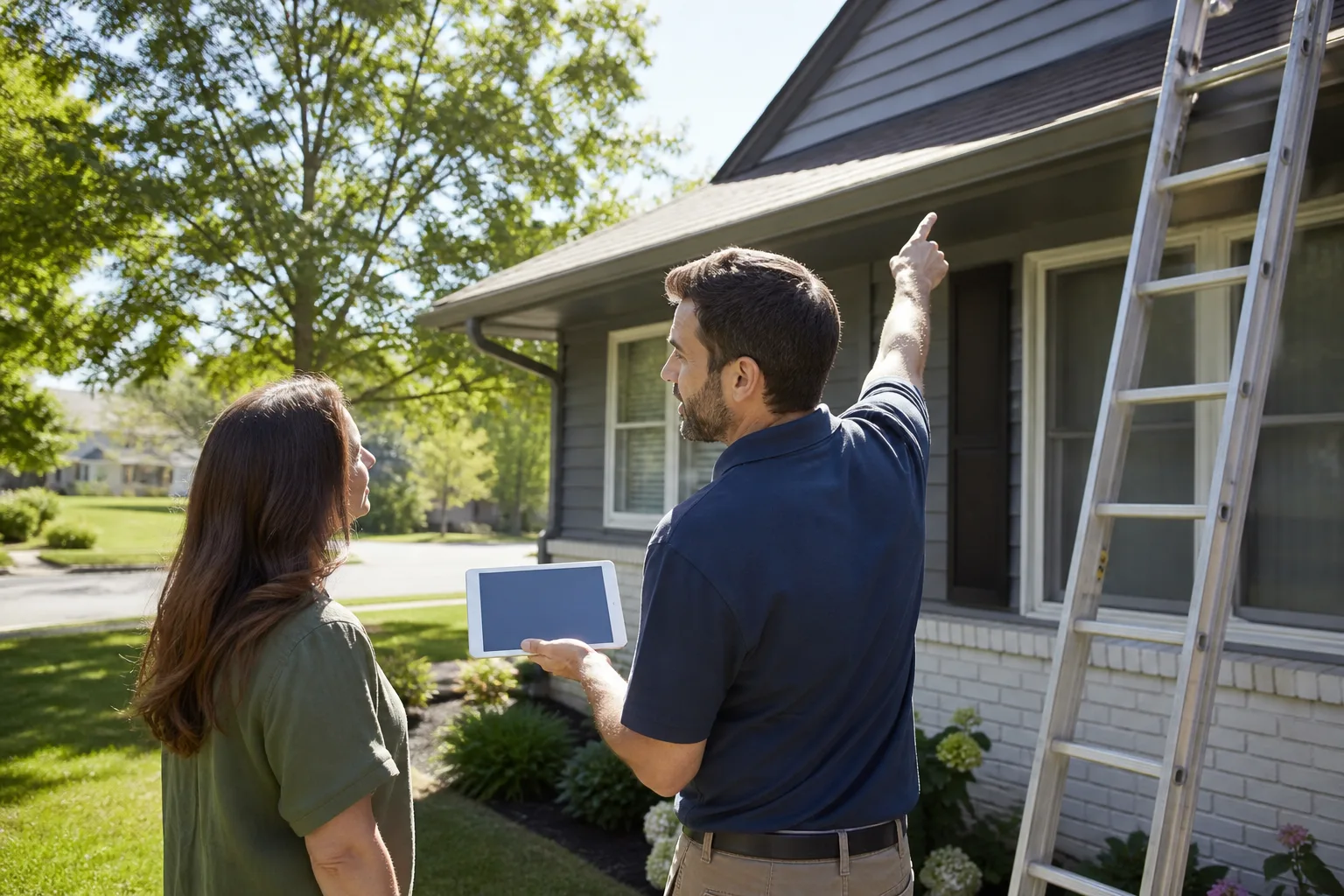
Free roof inspection with deck photos before we talk money - GAF and Owens Corning certified installation
Roofing Cost Breakdown: The Bellevue Homeowner’s Reference for 2026
Most Bellevue homeowners assume the highest roofing quote means the most thorough job, and the lowest means someone’s cutting corners. Neither is reliable. Two bids for the same square footage and the same shingle line can land 40 to 60 percent apart, and the gap usually lives in things you’ll never see once the ridge cap goes on: the underlayment weight, the ice-and-water barrier coverage, the ventilation math, the number of nails per shingle. This guide breaks a typical Bellevue roof replacement down line by line, shows what 2026 material and labor ranges actually look like here, and gives you a one-page spec sheet you can hand to any contractor so your three quotes describe the same roof.
Quick Answer
A full roof replacement on a typical Bellevue home runs roughly $18,000 to $38,000 in 2026, depending on roof size, pitch, material, and how much of the decking needs attention. The single biggest swing factor isn’t the shingle brand, it’s whether the quote describes a code-minimum assembly or a full climate-appropriate one. Ask for materials by name and you’ll see the difference in writing.
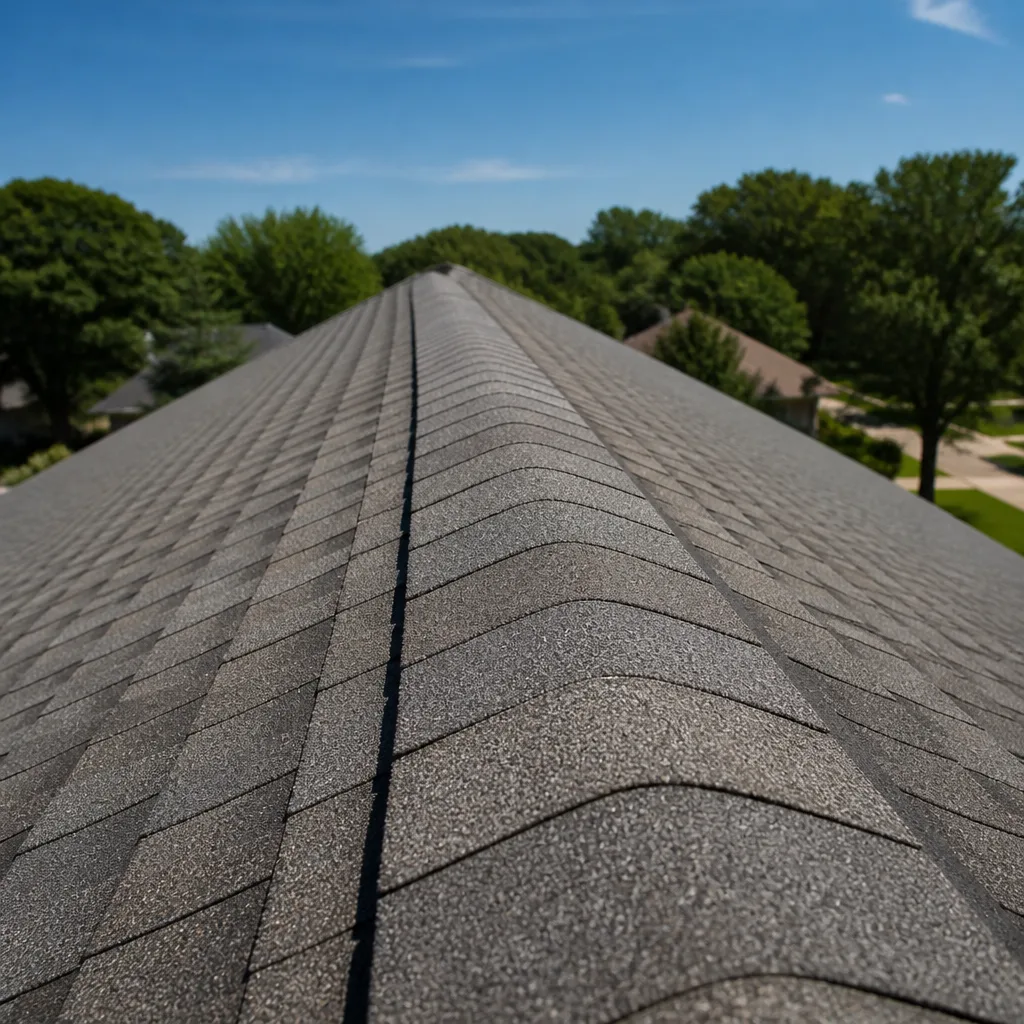
Styles & brands we work with
- Architectural shingles
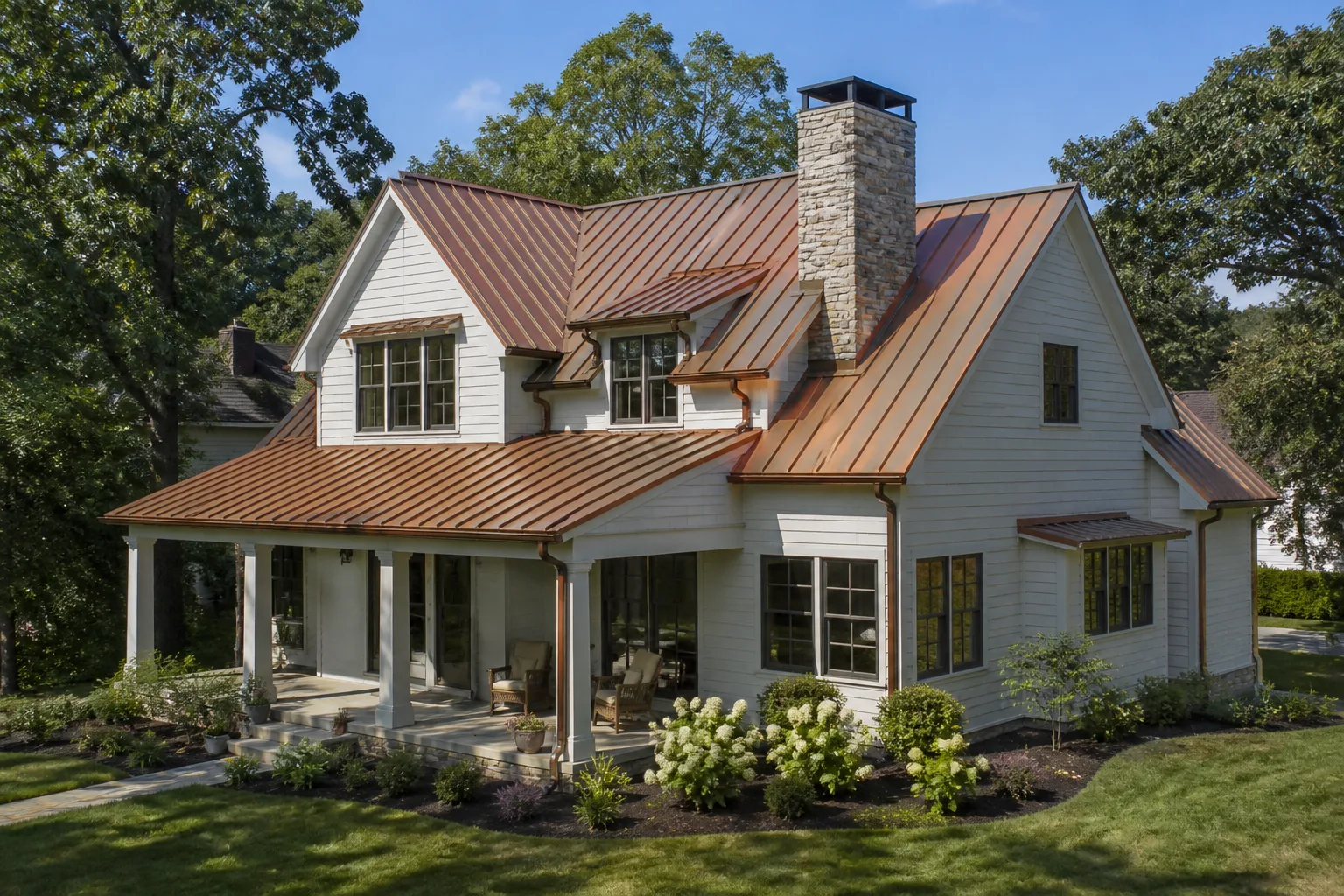
- Metal roofing
- Tile roofing
- GAF
- Owens Corning
- Flat & low-slope
Table of Contents
- What actually drives roofing cost in Bellevue?
- Line-by-line cost breakdown for 2026
- Why steep pitch adds legitimate labor cost
- Code-minimum vs. premium install: the real difference
- Manufacturer warranties: what the markup buys
- How to compare quotes apples-to-apples
- Shingle, tile, or metal: cost by material
- What happens during a replacement
What actually drives roofing cost in Bellevue?
Roofing cost in Bellevue is set by five variables, in roughly this order of impact: roof size in squares, roof pitch and complexity, chosen material, condition of the decking underneath, and the specification level of the assembly. Everything else – brand logo, truck signage, how nice the estimator was – lands far below those five.
A “square” is 100 square feet of roof surface, and it’s the unit every contractor prices in. A simple gable roof on a 2,000-square-foot Bellevue rambler might measure 22 squares. A cut-up hip roof with multiple valleys on a West Bellevue home of the same footprint can measure 30 or more. That measurement gap alone explains thousands of dollars between two quotes that look similar on paper at first glance.
Bellevue’s tree canopy and the region’s long wet season matter too. Roofs here spend months damp and months of summer baking that moisture out, and moss takes hold on north slopes that never fully dry. That cycle is why underlayment choice and ventilation matter more here than in a dry climate, and why a spec that passes in Phoenix isn’t automatically right for a roof in Bellevue. We’ve seen plenty of roofs fail early not because the shingles were bad, but because the assembly underneath couldn’t handle the moisture load.
Complexity is the last big lever. Dormers, skylights, chimneys, and multiple roof planes all mean more flashing, more cutting, more labor hours. A straightforward roof and a complicated one can share a square count and still differ by five figures once penetration detailing is priced in.
Line-by-line cost breakdown for 2026
A properly written Bellevue roofing quote breaks into these line items. Ranges below are typical for 2026 and assume a mid-size residential roof in the 24 to 28 square range. Your written estimate sets the final price – these are planning numbers, not quotes.
- Tear-off and disposal: $2,400 – $4,800. One layer of old shingle plus dumpster and haul-away. Two layers costs more in labor and disposal fees.
- Decking inspection and repair: $0 – $4,000+. Usually some sheathing replacement, occasionally more. Priced per sheet once the old roof is off.
- Underlayment: $1,200 – $2,800 for synthetic 30-pound equivalent across the field. This is where cheap quotes quietly cut.
- Ice-and-water barrier: $900 – $2,200, covering valleys, eaves, and penetrations to the depth the local code and pitch require.
- Ventilation upgrades (ridge vent, intake, baffles): $800 – $2,400. Often skipped entirely in low bids.
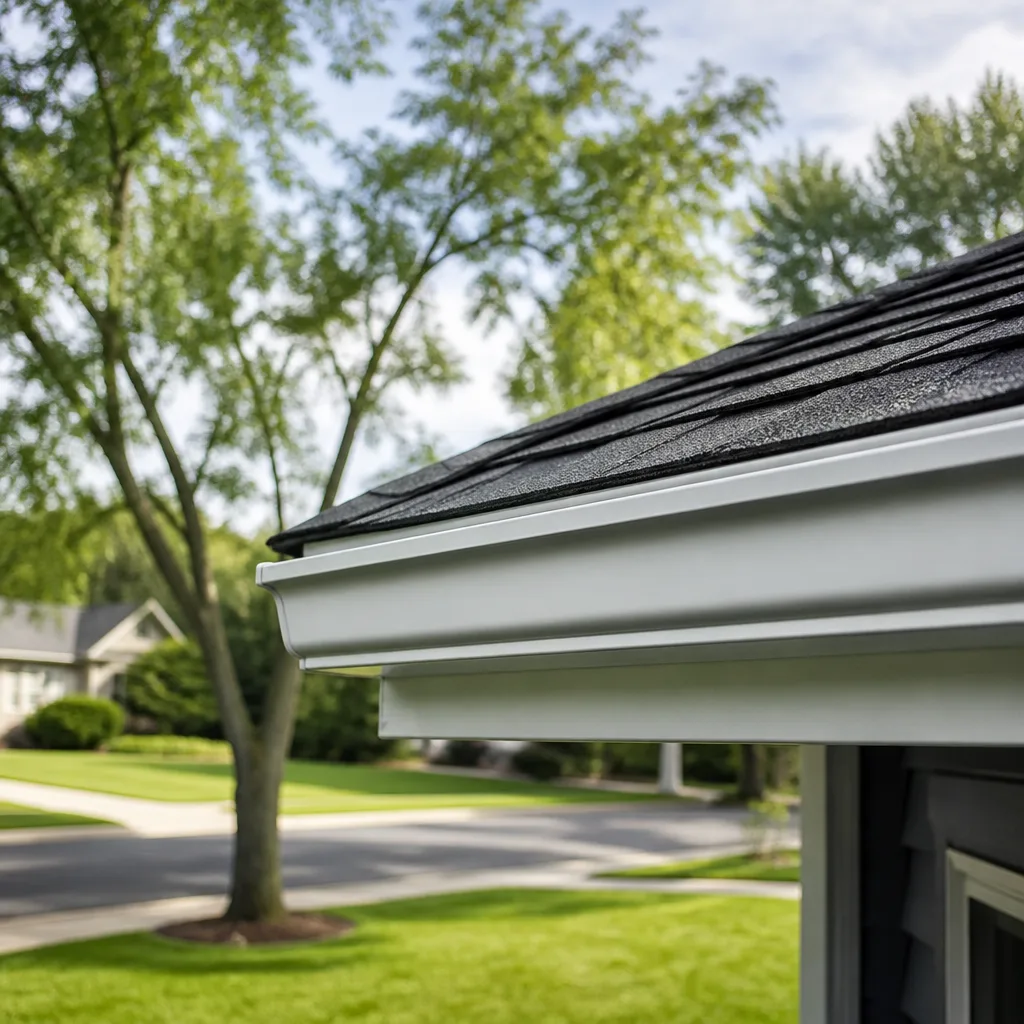
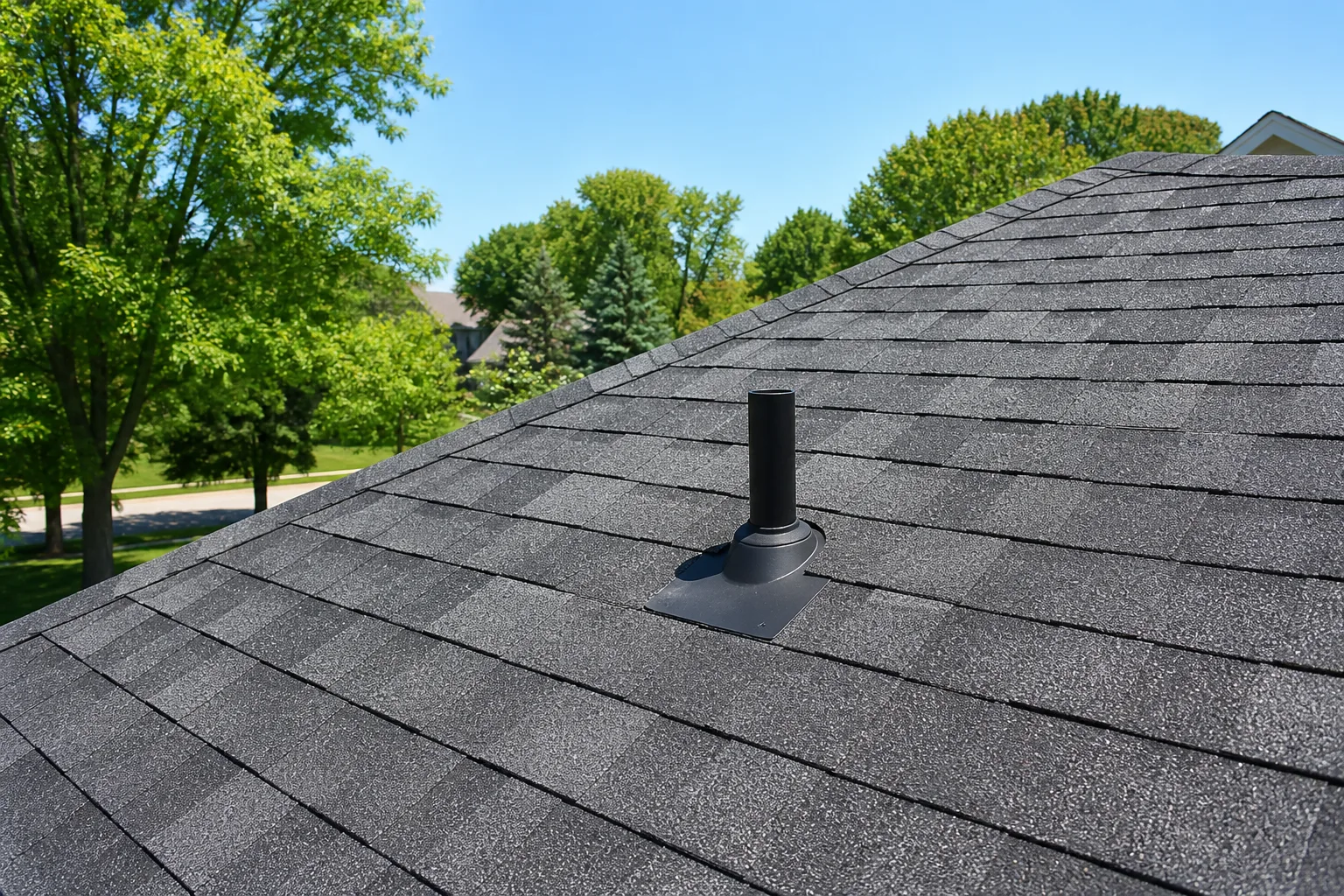
- Drip edge and flashing: $700 – $1,600, including new chimney, skylight, and wall flashing.
- Asphalt shingle material: $4,500 – $9,500 depending on line and brand.
- Installation labor: $5,500 – $11,000, scaled to pitch and complexity.
- Permit and inspection: $350 – $900, handled by the contractor.
- Final cleanup and magnetic sweep: included in any quote worth signing.
Add those up and you land between roughly $18,000 and $38,000 for a Bellevue replacement, which matches what we see in real bids around town. The line that swings most between a cheap quote and a thorough one is underlayment, followed closely by ventilation and ice-and-water coverage. Those are the three items to check first when a number looks too good.
Why steep pitch adds legitimate labor cost
Steep roofs cost more to work on, and in Bellevue’s hillier neighborhoods that shows up fast. Somerset and Factoria both have a lot of steeper pitches built to shed the region’s heavy rain, and those roofs demand safety rigging, roof jacks, slower movement, and often more crew hours per square than a low-slope roof.
This markup is real and it’s fair. A roofer on a 9/12 pitch is working on a surface where every step needs a plan, every bundle has to be staged carefully, and a fall is a serious event. Labor on steep work can run 25 to 40 percent above the same square footage on a walkable pitch.
What’s not fair is a quote that hides the pitch premium inside a vague total. Ask any contractor whether the bid includes a steep-pitch labor line. If the number is in there but unnamed, you can’t tell whether you’re being charged fairly or padded. A line-item quote solves this in one glance.
Steep roofs also shed water differently and dry differently, which affects how ice-and-water barrier should be laid and how ventilation performs. A quote that treats a Somerset 10/12 the same as a flat-ish Bellevue rambler isn’t pricing the actual roof.
Code-minimum vs. premium install: the real difference
Two quotes can cover the same roof with the same shingles and still differ by $4,000+ because of what’s under and around the shingle. Here’s the honest comparison.
Underlayment
Code-minimum work sometimes substitutes 15-pound felt for a synthetic 30-pound equivalent. The material difference on a mid-size roof is roughly $400. The performance difference in Bellevue’s wet cycle is years – the felt degrades faster when it’s wetted and dried repeatedly, and it’s far more prone to tearing during install, which defeats the whole point of a secondary water barrier.
Ice-and-water barrier
Bellevue’s winter isn’t Buffalo, but ice dams form where warm attic air hits a cold roof over eaves. Proper coverage means full membrane at eaves, valleys, and all penetrations. A cheap quote often runs it only on valleys, or skips eave coverage on low-pitch sections. The cost difference is a few hundred to a thousand dollars. The difference after a bad ice season can be a stained ceiling.
Ventilation
Balanced intake and exhaust ventilation is what keeps an attic dry and shingles living to their rated lifespan. Adding a proper ridge vent and adequate intake, with baffles at the eaves so the insulation doesn’t choke the airflow, adds $800 to $2,400. It’s the most commonly skipped line item in cheap bids, and it’s responsible for a huge share of early roof failures on Bellevue homes.
The honest rule: a code-minimum install isn’t illegal and it isn’t always wrong. It just doesn’t perform the way a fully specified one does. If a quote is $5,000 lower than the others, look directly at these three lines before assuming you’ve found a deal.
Manufacturer warranties: what the markup buys
Manufacturer systems like GAF, CertainTeed, Owens Corning, IKO, Atlas, and Tamko offer tiered warranties, and the highest tier usually requires a full system install – every component from the same manufacturer’s approved list, installed to that manufacturer’s spec – plus a certified installer. That’s the reason premium quotes cost more: the premium warranty isn’t a paper add-on, it’s a whole assembly requirement.
The markup on a premium warranty tier typically runs several thousand dollars over a standard manufacturer warranty. Whether it pays off in Bellevue comes down to two things: how long you plan to stay, and whether the quote actually specifies the full matching system. A premium warranty attached to a mixed-component install can be voided on inspection, which means you paid for something you can’t claim.
In our experience, the middle warranty tier is the sweet spot for most Bellevue homeowners – real coverage through the installer plus a manufacturer component warranty – while the top tier makes sense when the homeowner plans to be in the house past the warranty period and the roof is on the more expensive end. We work with seven manufacturer brands so the warranty decision follows the homeowner’s actual timeline, not what a single-brand installer has on the shelf.
How to compare quotes apples-to-apples
You don’t need to know how to roof a house to spot a mismatched bid. You need one page of specifications, then a side-by-side. Hand this sheet to each contractor and ask them to price it line by line.
- Square count and pitch. Ask each contractor to state their measured squares and the roof’s pitch. If the numbers disagree by more than 10 percent, one of them hasn’t measured carefully.
- Underlayment – product name and weight. “Synthetic” isn’t enough. Ask for the product name and the weight class. If they can’t name it, they likely haven’t priced it specifically.
- Ice-and-water barrier – coverage areas. Request a line stating where it goes (eaves, valleys, penetrations, low-slope areas) and the membrane product name.
- Ventilation – intake and exhaust square inches. A proper quote gives the plan, not just “we’ll add ridge vent.”
- Flashing – new or reused. Reusing old flashing is a common corner-cut. Ask whether new flashing is included for chimney, skylights, and all walls.
- Decking repair – how it’s priced. “$X per sheet, priced after inspection, approved before install” is the fair approach. A single lump sum with no per-sheet price hides the real cost.
- Permit and inspection. Confirm which party pulls the permit and who pays. In Bellevue, most roof replacements need one.
- Material brands and lines. Ask for the exact manufacturer, product line, and color name – not just “architectural shingle.”
- Warranty terms – labor and manufacturer. Get the years, what’s covered, what voids it, and whether the manufacturer warranty requires a certified installer.
- Cleanup and final walk-through. Ask how they handle nails and debris, and whether the final inspection is documented.
If a contractor won’t specify materials by name, that’s your answer. Ask once more, in writing. A professional team that installs for a living will have no trouble naming the components. A low bid that’s low because the specs are vague usually stays vague right up to the day the roof is installed – and then it’s permanent.
This is why we encourage every Bellevue homeowner to get at least three line-item quotes on roof replacement before deciding. The differences reveal themselves in writing, not in conversation.
Shingle, tile, or metal: cost by material
Material choice moves the total by more than any other single decision. Here’s how the three main residential categories shake out for 2026 in Bellevue.
Asphalt shingle
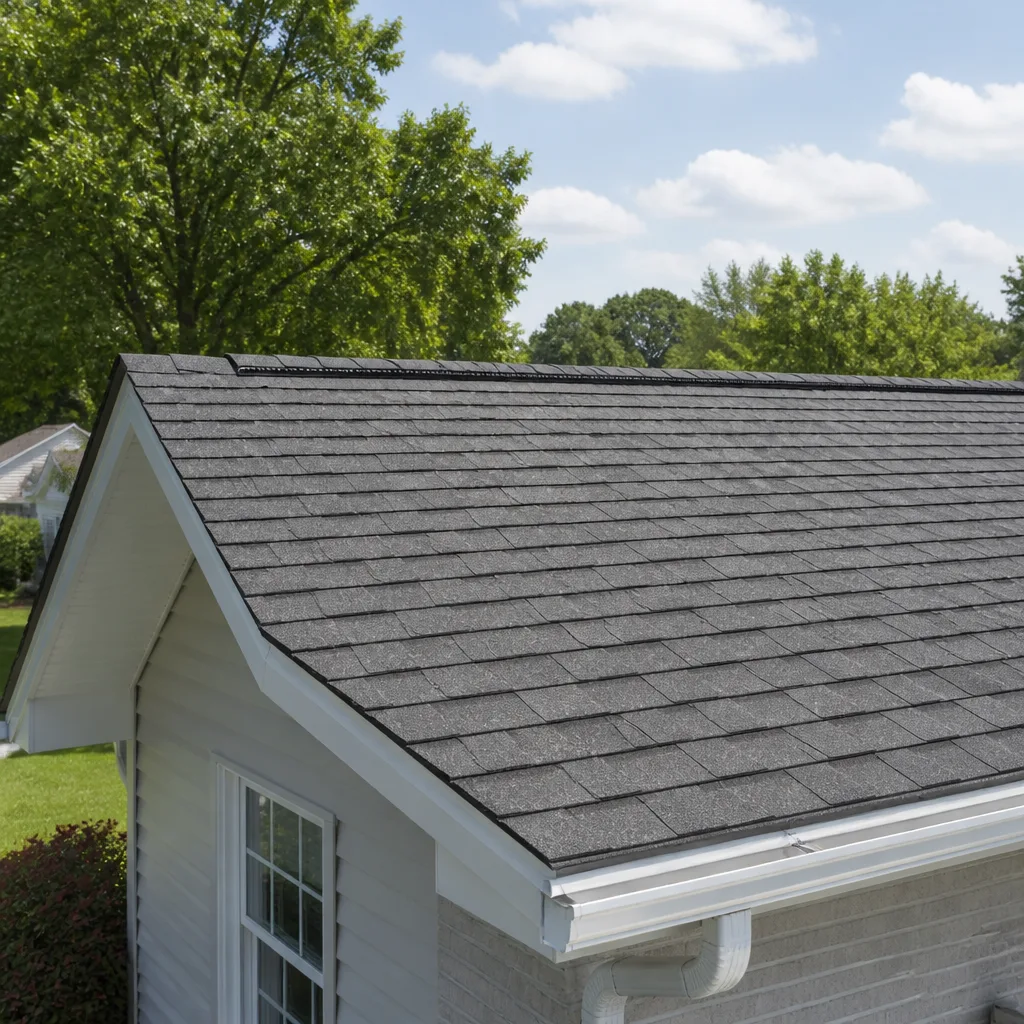
The most common choice and the lowest entry point. Architectural shingles from GAF, CertainTeed, Owens Corning, IKO, Atlas, or Tamko land in the $18,000 to $28,000 range for a typical Bellevue replacement. Lifespan depends on the line, and the assembly underneath matters more than the warranty years printed on the wrapper. For shingle roofing, we recommend choosing the line by the roof’s exposure and the homeowner’s timeline rather than by which brand is most familiar.
Tile
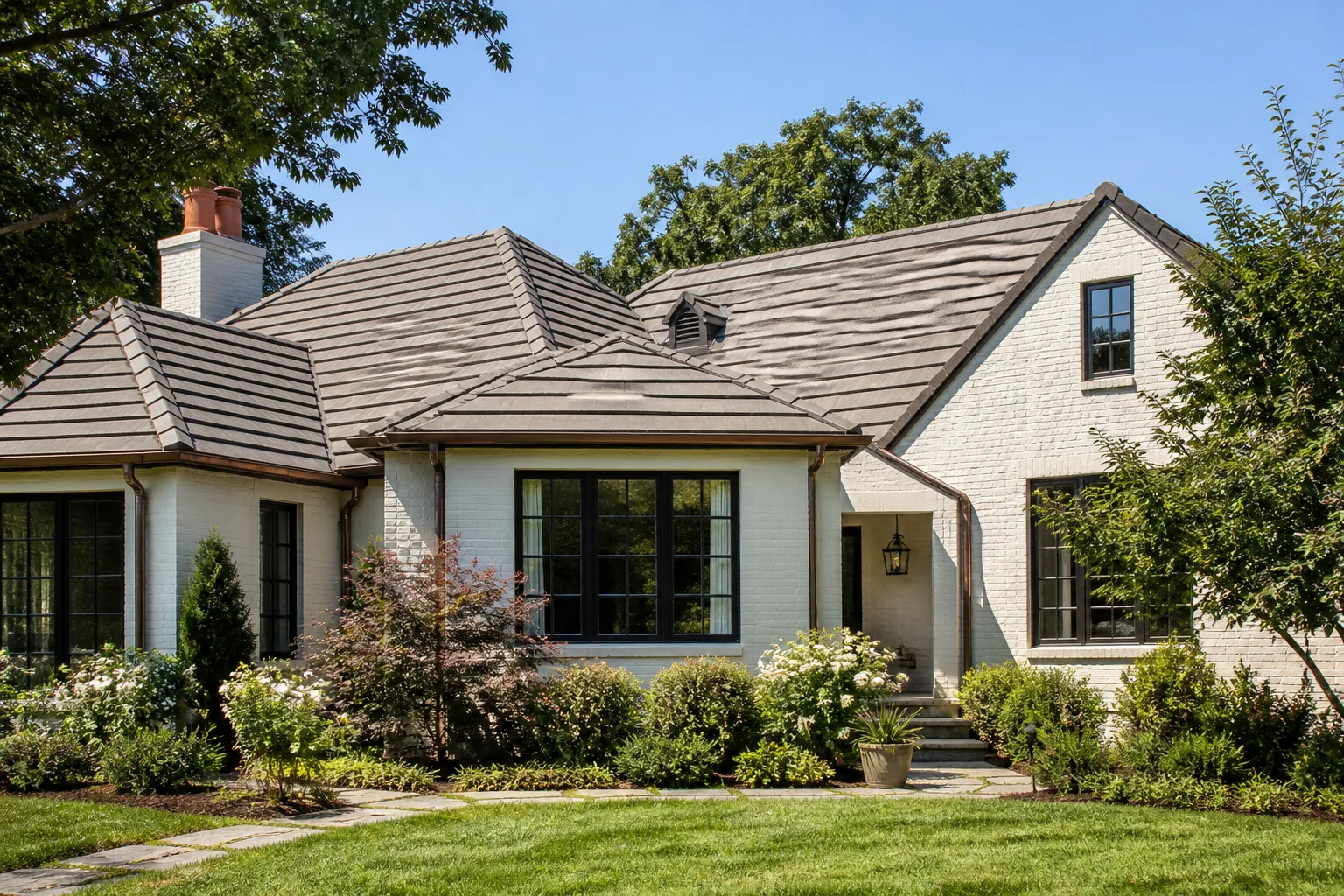
Tile costs more up front – commonly $30,000 to $55,000+ depending on the tile product and the structural support required – but has a long service life and holds color well. Bellevue roofs where tile makes sense are usually those with the structural capacity to carry the weight. We install Boral tile systems and can walk through the load question before you commit to a direction.
Metal
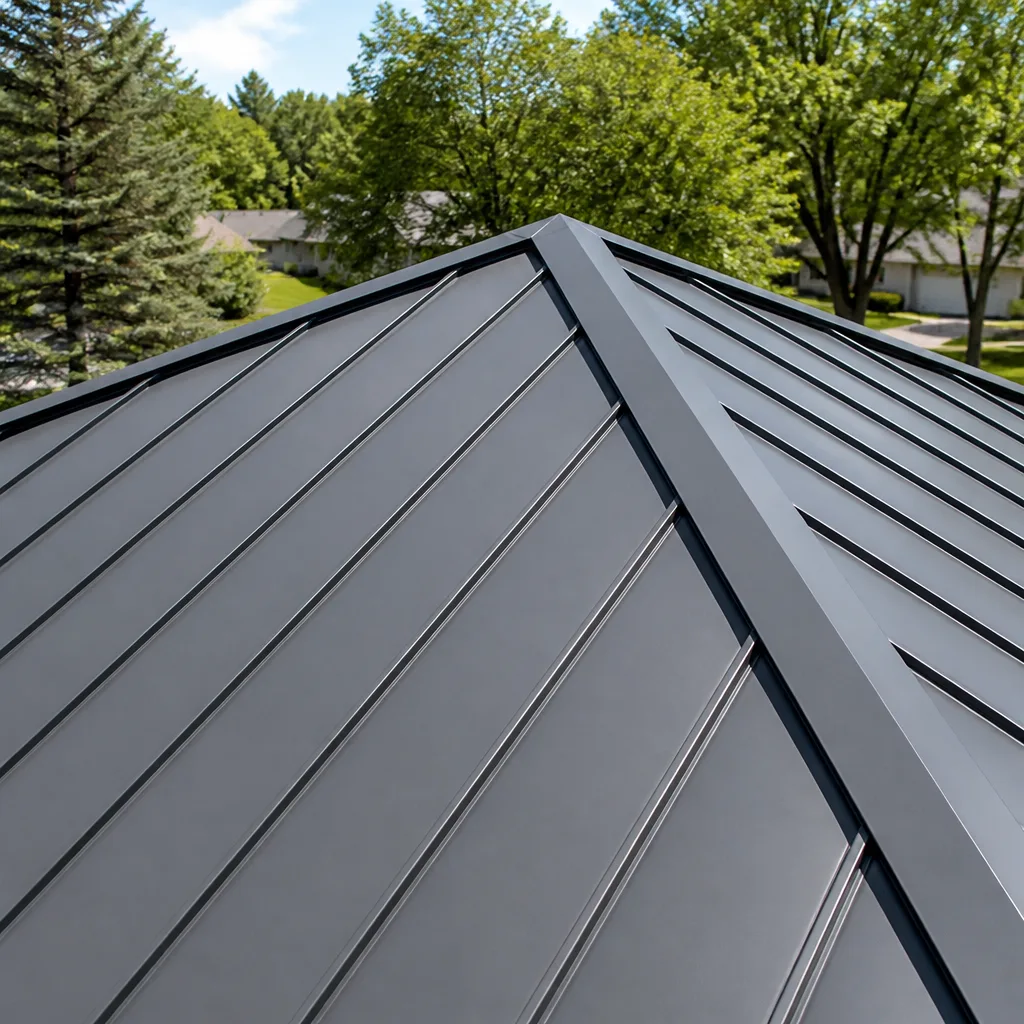
Metal roofing runs roughly $28,000 to $50,000+ on a typical Bellevue home, depending on panel style and coating. The upside is longevity and lower long-term maintenance. The trade-off is a higher up-front cost and a different aesthetic that should suit the house. For new construction where the roof is being planned from the start, metal is often the easiest to specify early and get right the first time.
For a homeowner building a house rather than replacing a roof, new roof installation lets you choose the material direction before the framing closes, which makes ventilation and structural loading decisions much cleaner. That’s a real advantage, and it’s why we handle both full replacements and installs from the ground up.
| Material | Typical 2026 Bellevue Range | Notes |
|---|---|---|
| Asphalt shingle (architectural) | $18,000 – $28,000 | Lowest entry, most common, brand choice matters |
| Tile (Boral or similar) | $30,000 – $55,000+ | Long service life, structural check required |
| Metal | $28,000 – $50,000+ | Longevity and low maintenance, higher up-front cost |
What happens during a replacement
A full Bellevue roof replacement typically runs two to four working days for a straightforward shingle roof, longer for tile or metal, complex roofs, or when significant decking repair turns up. Here’s the sequence, in general terms.
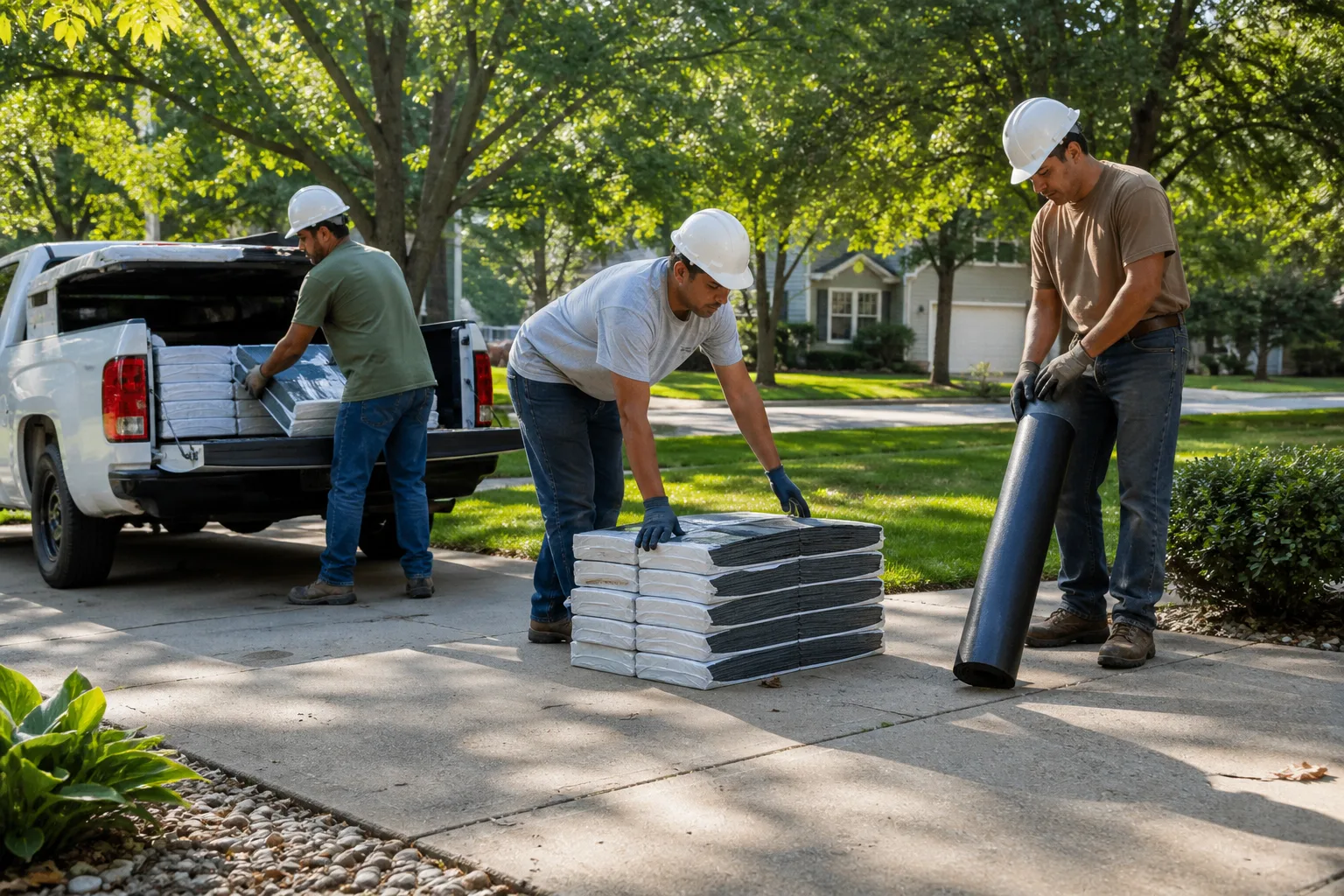
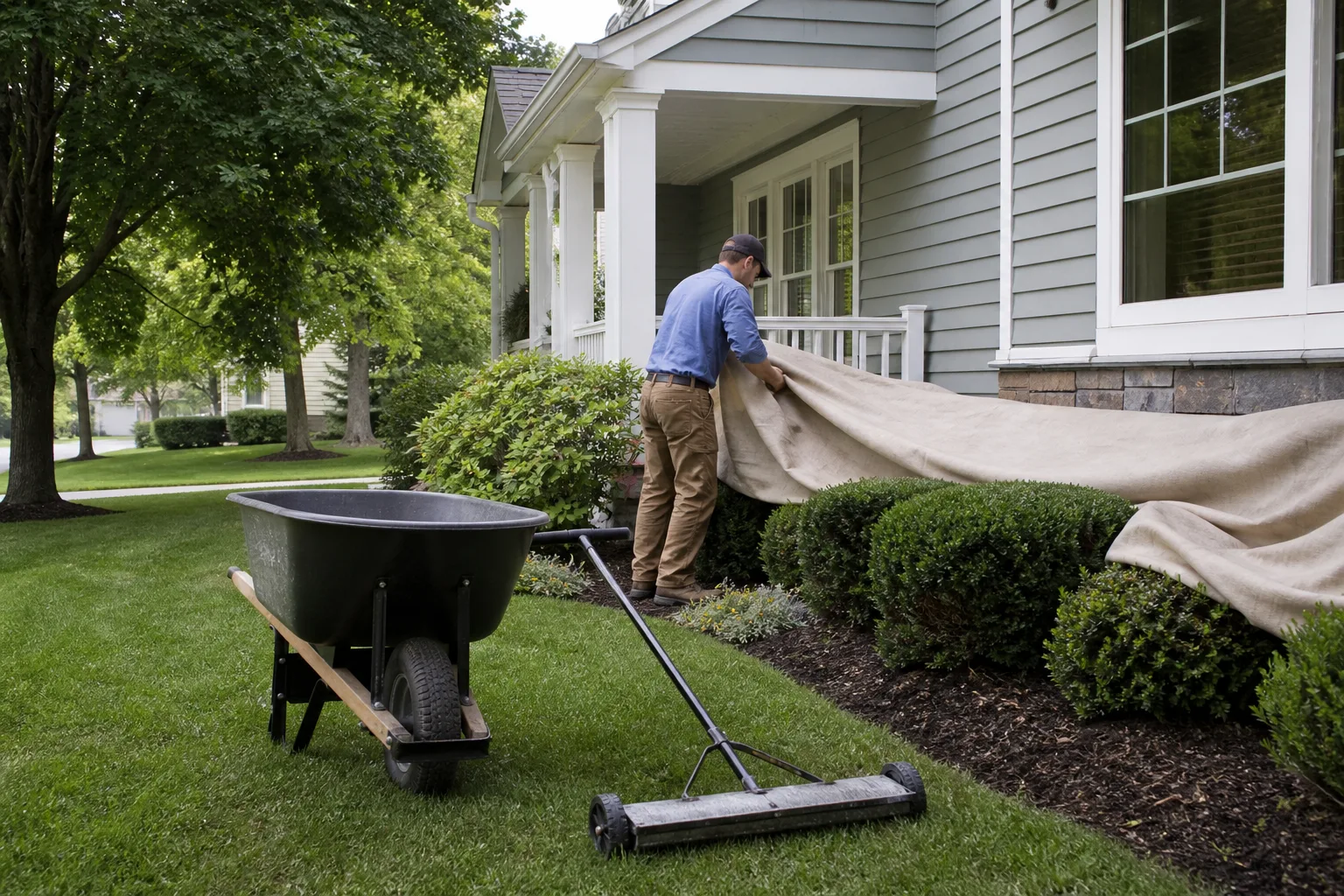
- Preparation. The crew stages materials, covers landscaping, sets fall protection, and performs a final ground survey before tear-off.
- Tear-off. Old shingles come off, along with old underlayment and any failing flashing. Decking is exposed.
- Decking inspection. The crew walks the deck and marks any soft or damaged sheathing. Repair is approved with the homeowner before install continues, at the per-sheet price in the original estimate.
- Underlayment and ice-and-water barrier. Synthetic underlayment goes down across the field and the ice-and-water membrane is applied at eaves, valleys, and penetrations.
- Flashing and ventilation. New flashing goes on around all penetrations. Ridge vent and intake ventilation are installed.
- Material install. Shingles, tile, or metal panels are installed according to the manufacturer’s spec, which is what keeps warranties valid.
- Final detailing and cleanup. Ridge cap, hip details, and finish work. Then a magnetic sweep and a documented walk-through.
Permits and inspection happen on the schedule the city sets. Most Bellevue roof replacements need a permit, and the inspection is part of the job, not an extra step you have to arrange. Confirm in writing that the contractor pulls and pays for it.
If you want to see the full range of what we do – shingle, tile, metal, replacement, and new construction – the overview on Roofing Bellevue Pros covers it.
Common Mistakes to Avoid
- Comparing a bid with a line-item quote. A one-number bid and a ten-line itemized quote aren’t the same document. The only fair comparison is line-by-line, material-by-material. If a bid won’t break down, it can’t be compared.
- Choosing by total price alone. The lowest Bellevue quote is often low because the assembly is thin – 15-pound felt instead of synthetic, valleys-only ice-and-water barrier, skipped ventilation. A $4,000 gap in the quote is usually a bigger gap in lifespan.
- Reusing flashing to save money. Reused step flashing and chimney flashing around Bellevue’s wet-season roofs are a leading cause of interior leaks within a few years. New flashing is inexpensive relative to a ceiling repair.
- Ignoring ventilation math. Adding exhaust without intake just pulls air from the wrong places. A proper quote shows both sides of the ventilation equation, not just a ridge vent line.
- Skipping the permit. Most roof replacements in Bellevue require one. A permit isn’t paperwork busywork – it triggers an inspection that proves the roof was installed to code.
- Accepting a warranty without reading what voids it. Manufacturer warranties with the longest terms often require a full system and a certified installer. If the quote doesn’t specify the full system, the premium warranty may be unrecoverable.
- Not asking about decking repair pricing up front. Sheathing repair is the most common surprise on a Bellevue replacement. A fair quote prices it per-sheet before work begins so there’s no change order drama.
See the difference
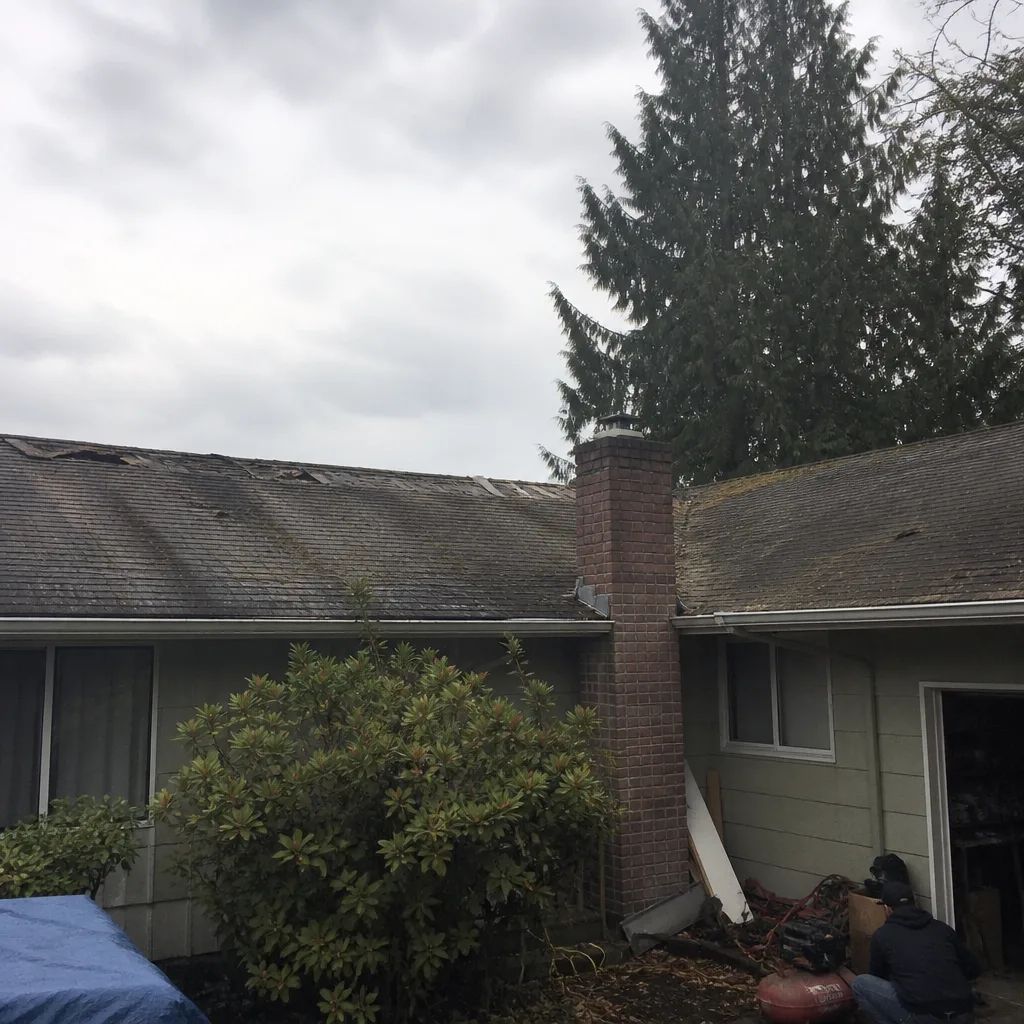 Before
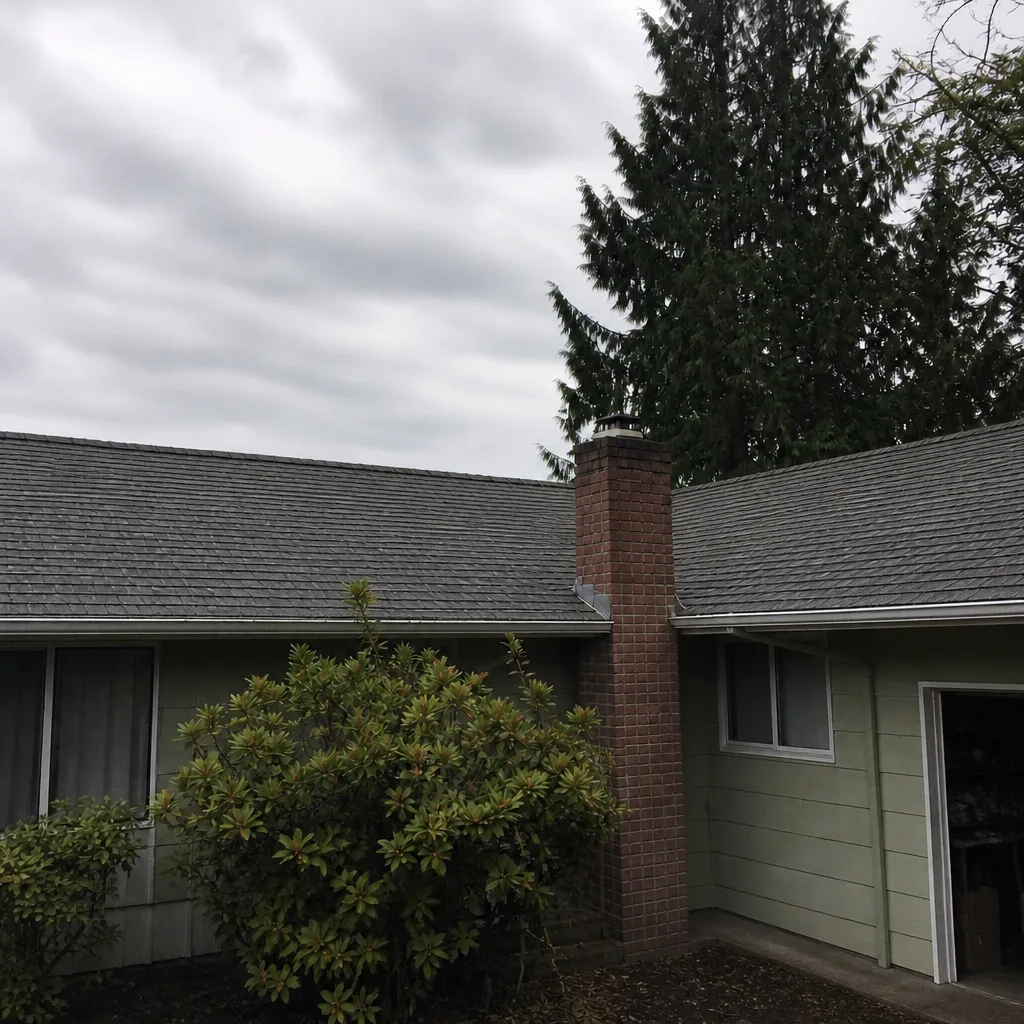 After
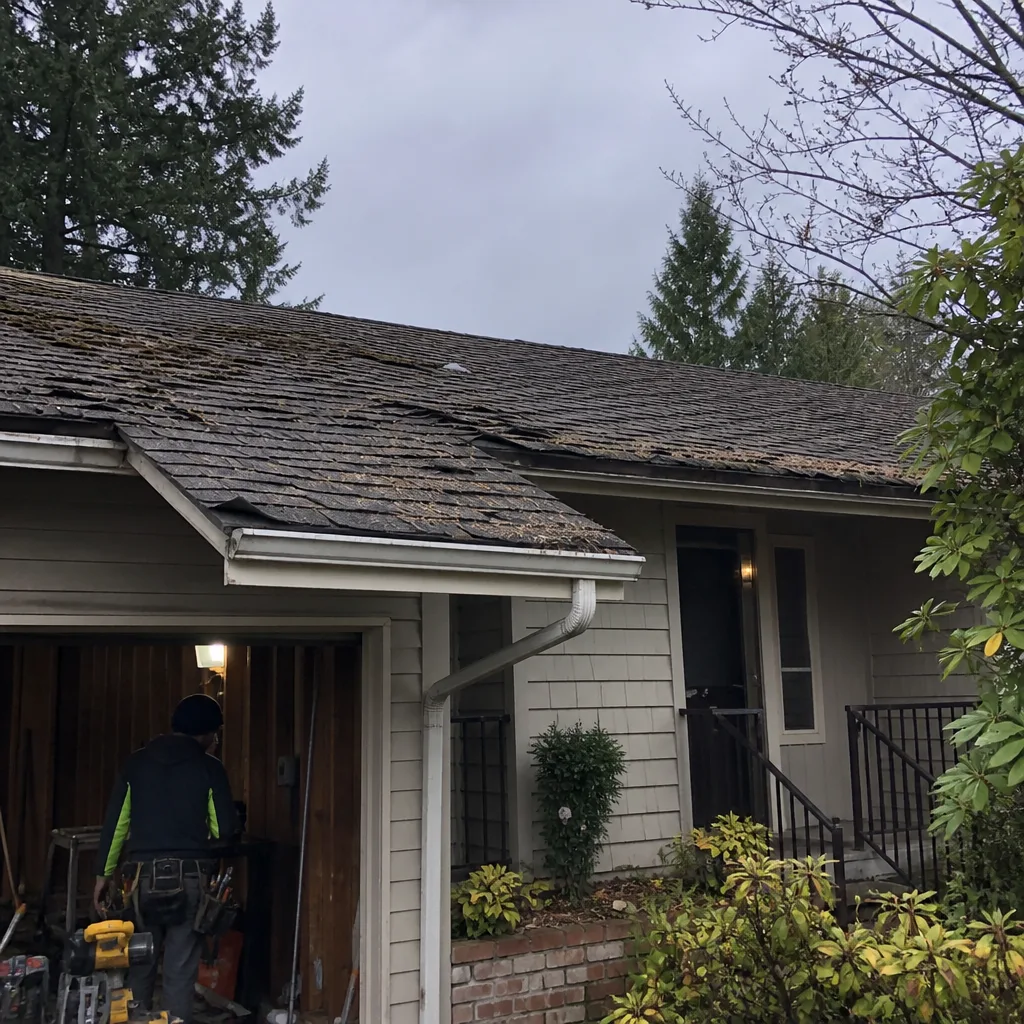 Before
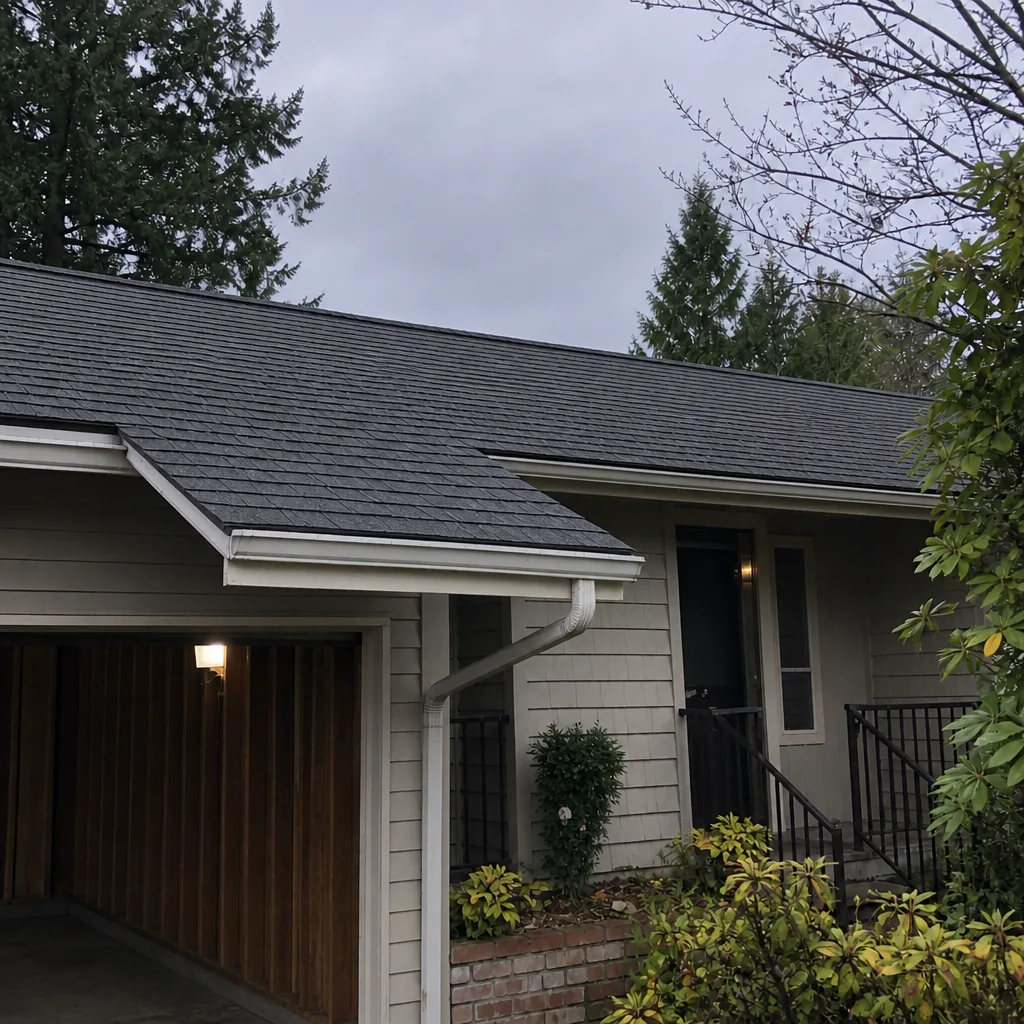 After
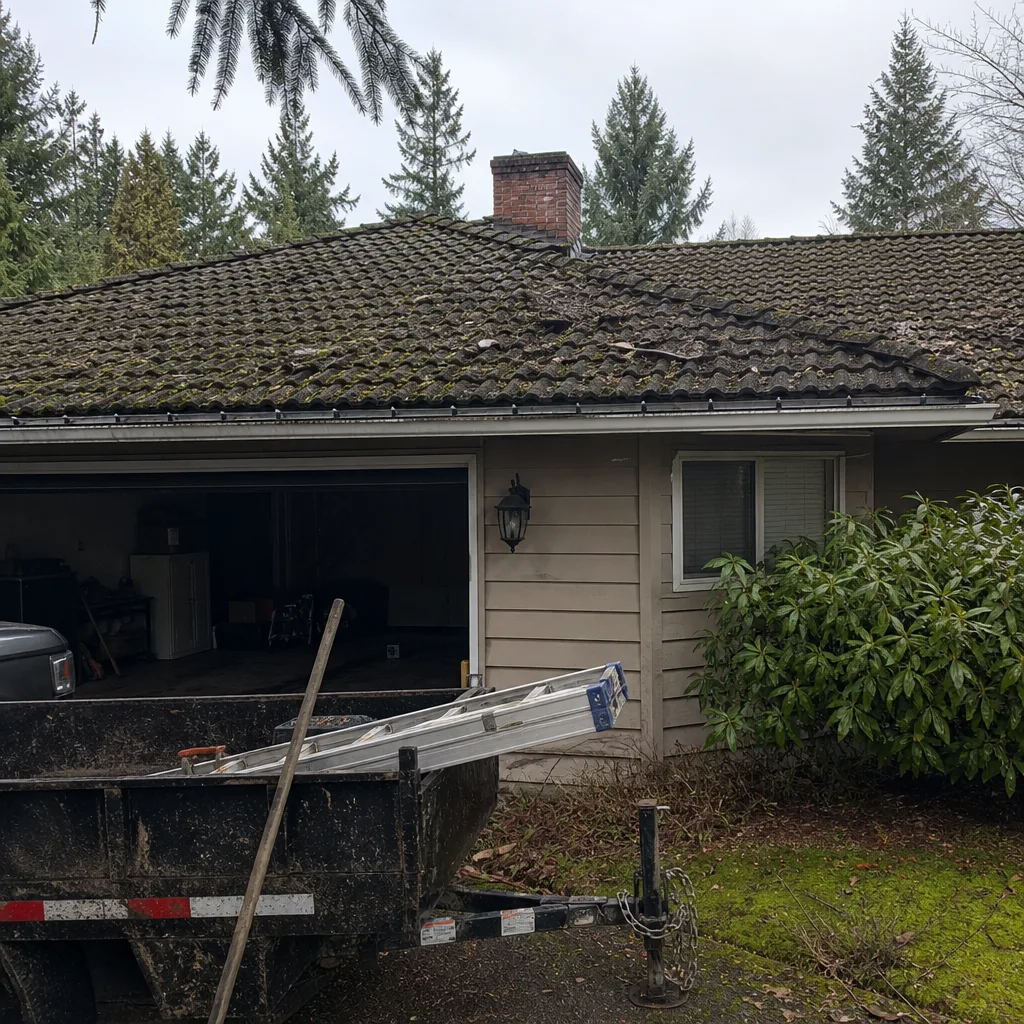 Before
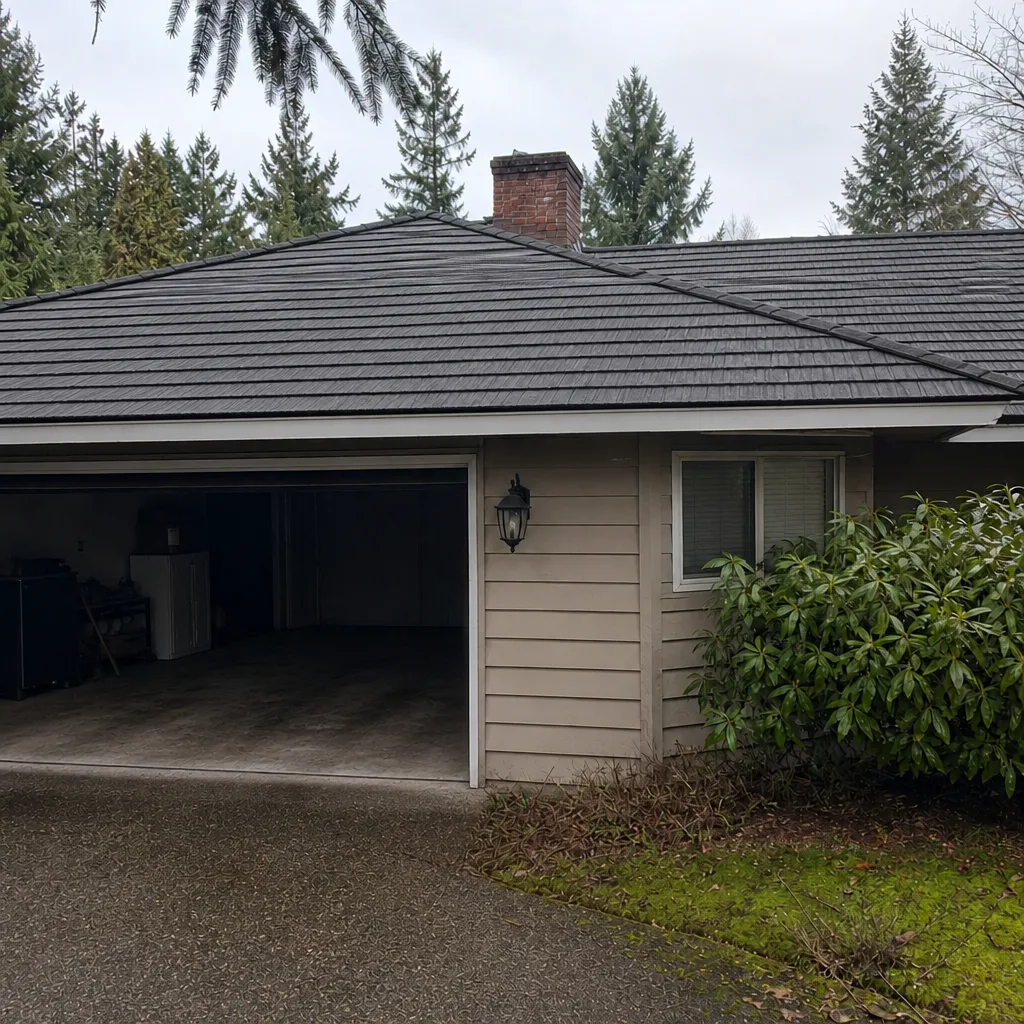 After
When to Call a Professional
Some roof work is safe to check yourself – a visual scan from the ground, a look at the attic for stains, a quick inspection of ceiling drywall after a storm. Anything that puts you on the roof, near the roof’s edges, or near structural fasteners is a professional’s job. In Bellevue, working a wet or mossy roof surface is genuinely dangerous, and the tools and safety gear a trained crew uses aren’t something to improvise. The same goes for any roof replacement involving more than a patch – underlayment, ventilation, flashing, and ice-and-water barrier are assemblies, and one weak layer undermines the rest. Roofing Bellevue Pros offers free estimates in Bellevue – call (425) 699-1466.
We answer 24/7. Fast dispatch from 7am to 7pm, Sunday through Friday.
Frequently Asked Questions
Most Bellevue roof replacements fall between $18,000 and $38,000 for asphalt shingle, with tile and metal running higher. The range depends on roof size, pitch, material choice, and the specification level of the assembly. Call (425) 699-1466 for an exact quote – estimates are free.
The variation almost always comes down to specification and complexity – not contractor greed. Underlayment weight, ice-and-water coverage, ventilation, flashing replacement, and how each contractor has measured the roof account for most of the spread. Request line-item quotes from three contractors and the basis for each number becomes obvious.
Sometimes a leaner quote can be honest if the homeowner knowingly chooses a code-minimum assembly on a less exposed roof and plans to sell within a few years. The problem is that a low quote rarely announces what was cut – it usually just lists a total. Ask any low bidder to name the underlayment product, the ice-and-water coverage, and the ventilation plan in writing.
Most Bellevue roof replacements require a permit, although specifics vary by scope and by what’s being changed. Ask your city’s building department for the exact requirements on your address, and ask any contractor to confirm in writing that the permit and the inspection are included in the price. Call (425) 699-1466 for a free estimate.
Only for genuine decking repair discovered after tear-off, and only at the per-sheet price stated in the written estimate. A fair contract spells out that pricing up front and requires approval before repair continues. Anything else – a vague change order, a sudden “found more damage” call with no photos – is a warning sign. Call (425) 699-1466 to talk through an estimate.
A straightforward asphalt shingle replacement typically takes two to four working days, with tile and metal running longer and complex roofs taking more time. Significant decking repair, weather, and inspection scheduling can all extend the timeline. Your written estimate should give you a project-specific estimate. Call (425) 699-1466 – estimates are free.
The Bottom Line
Roofing cost in Bellevue is driven by measurable variables: squares, pitch, material, decking, and spec level. Two quotes with a 40 to 60 percent gap aren’t a sign that one contractor is gouging – they’re a sign that two very different roofs are being proposed. The 2026 answer is straightforward: use a spec sheet, demand line-item pricing, and read the underlayment, ice-and-water, and ventilation lines before you sign. That single discipline turns a roofing decision from a guess into a choice. If you’d rather have a conversation than a pitch, we’re glad to walk any Bellevue roof through it.
Call (425) 699-1466 for a free estimate. We answer 24/7. Fast dispatch from 7am to 7pm, Sunday through Friday.
Written by the team at Roofing Bellevue Pros.