Last updated November 25, 2026
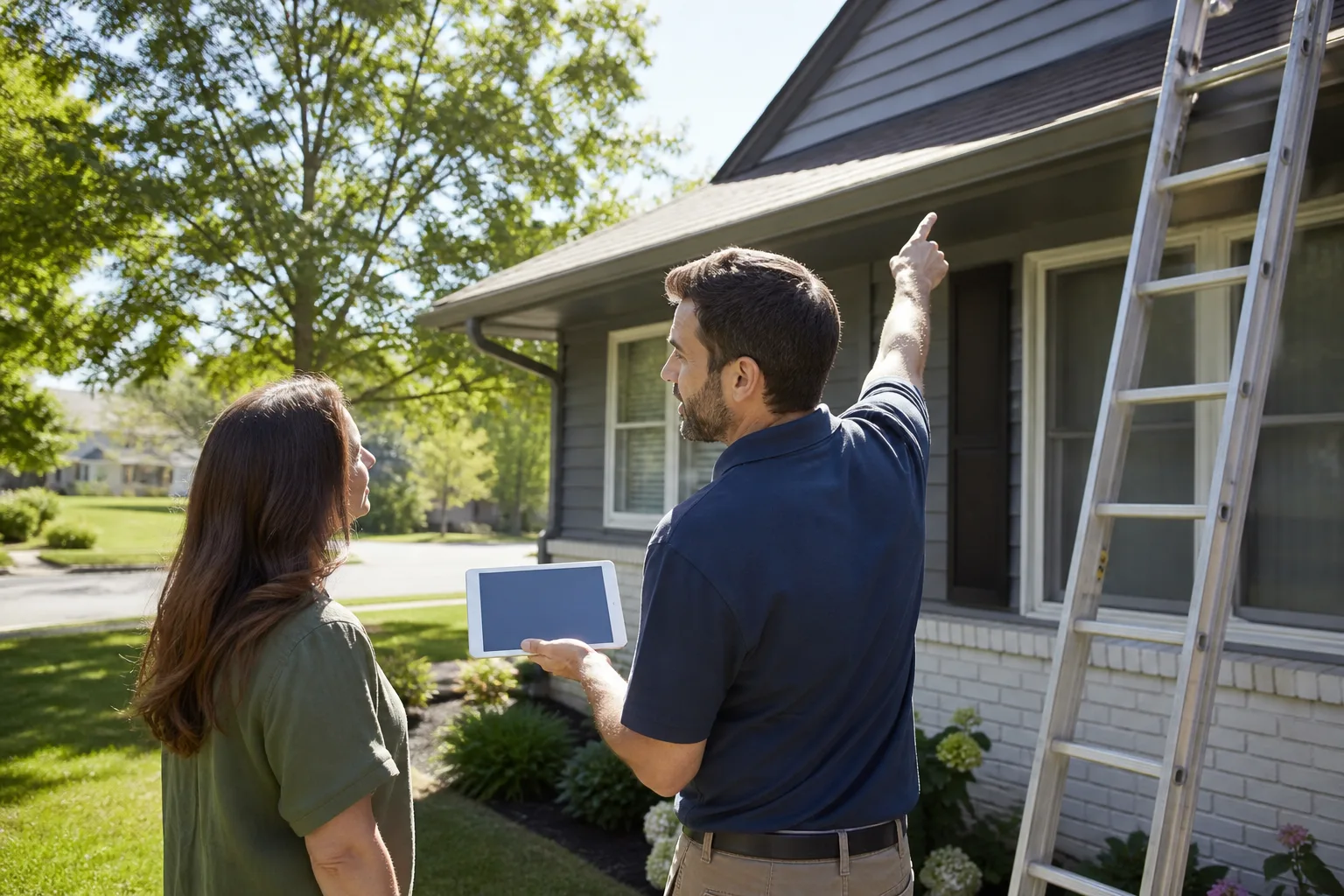
Free roof inspection with deck photos before we talk money - GAF and Owens Corning certified installation
The Complete Roof Replacement Guide for Bellevue Homeowners
Most roof replacement advice you’ll read online was written for a national audience, and it shows. It talks about storm damage, hail, and blistering summer sun – conditions that barely touch Bellevue. Here, the thing that wears out a roof is quieter: a steady drizzle that keeps the deck damp for months, freeze-thaw cycles that open tiny seams at elevation, and ventilation designs that let moisture sit in the attic instead of moving it out. You can buy premium shingles and still lose the roof early if the ventilation and underlayment are wrong. This guide walks through how a Bellevue roof replacement actually works – the materials, the climate math, the HOA and permit hurdles, and the decisions that matter most.
Quick Answer
A roof replacement in Bellevue is a full tear-off and rebuild of the roof system – deck inspection, underlayment, ventilation, flashing, and finished roofing material – not a cosmetic overlay. The right material depends on your roof’s pitch, your HOA’s architectural standards, and your home’s value bracket, with asphalt shingle, tile, and metal each fitting different Bellevue situations. Get a written, line-item estimate before work starts so the scope and price are locked in.
Styles & brands we work with
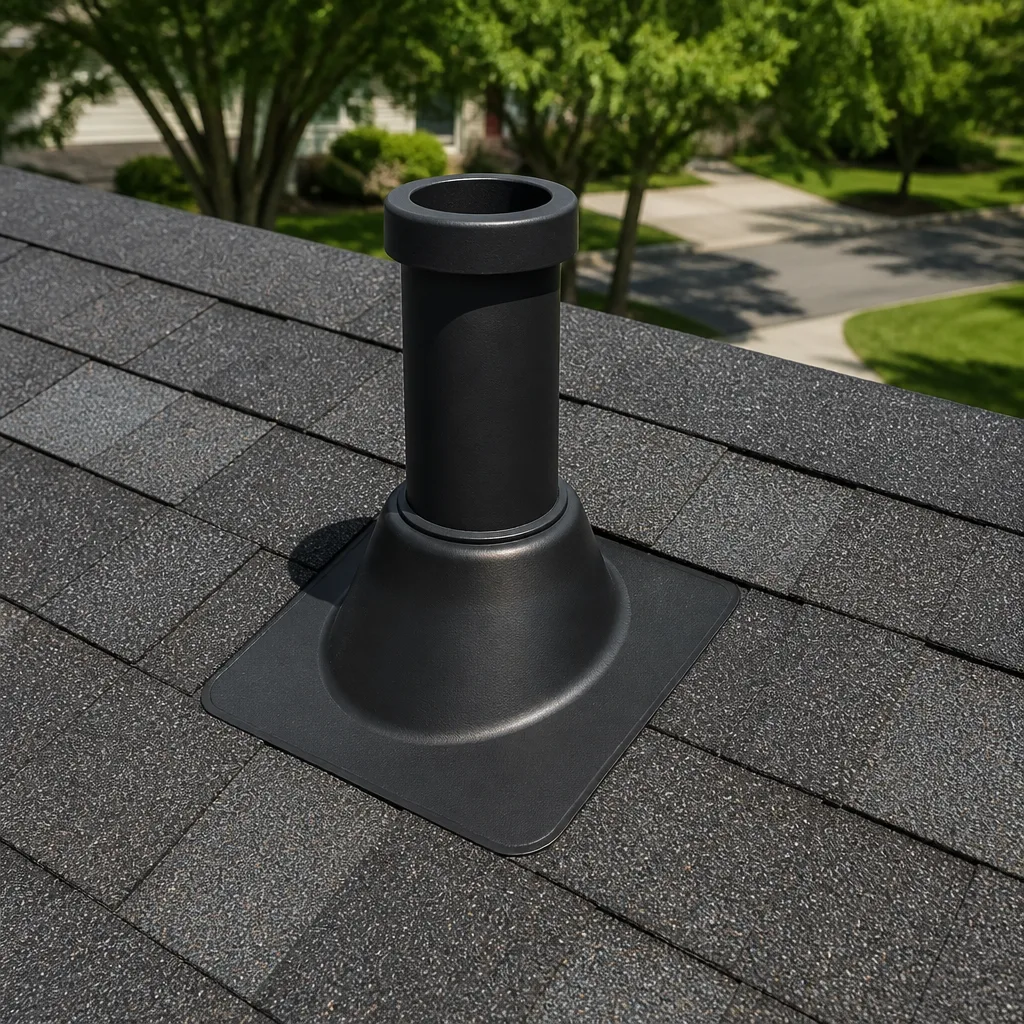
- Architectural shingles
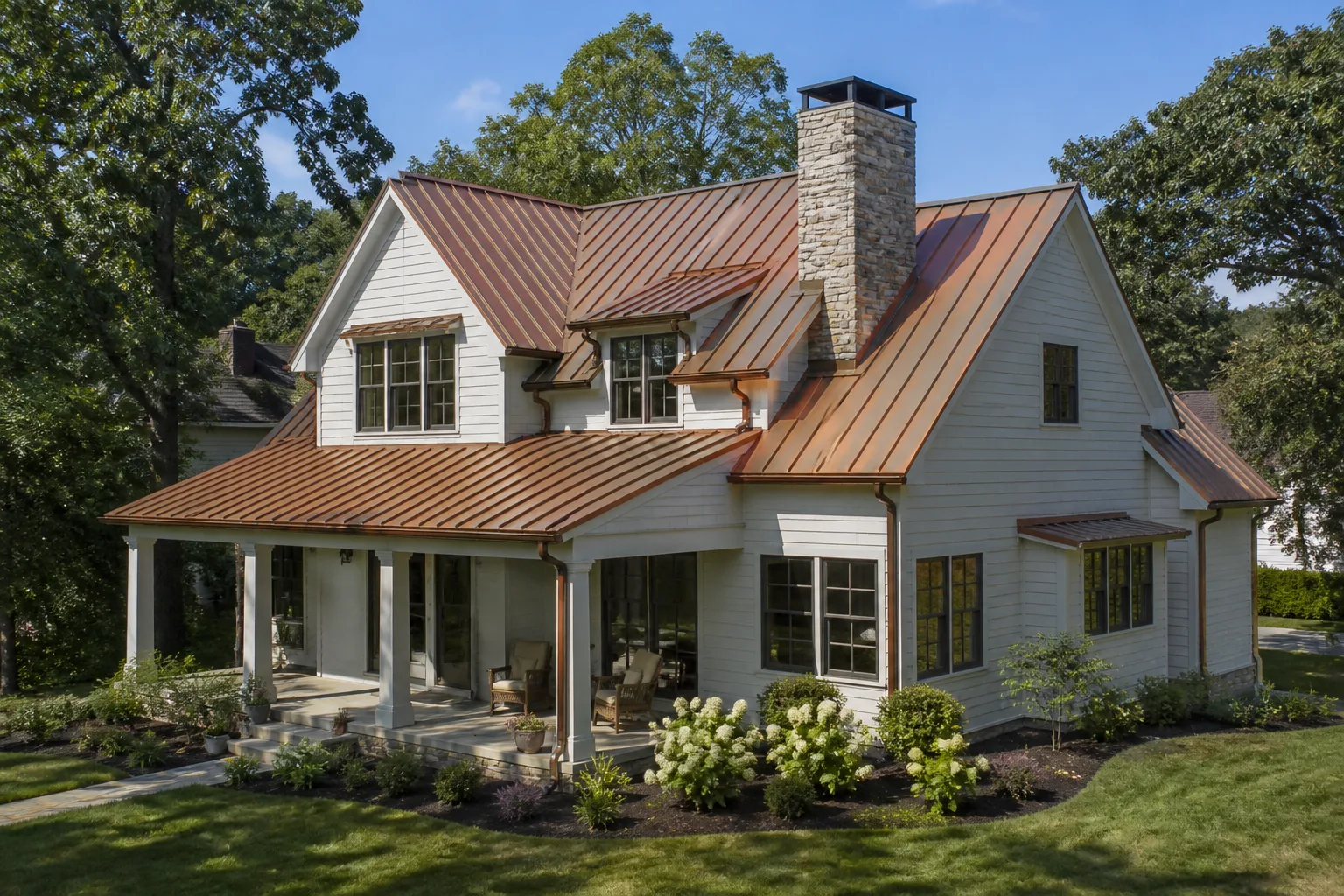
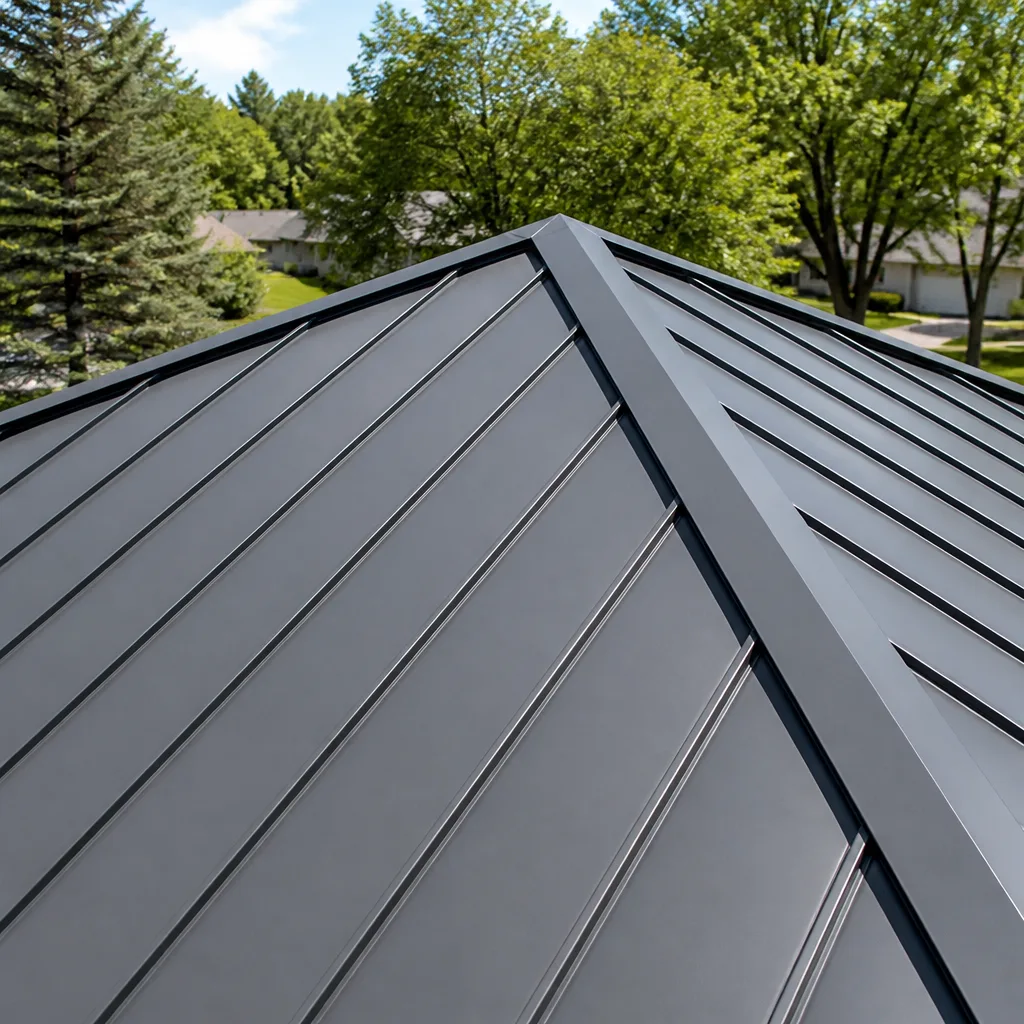
- Metal roofing
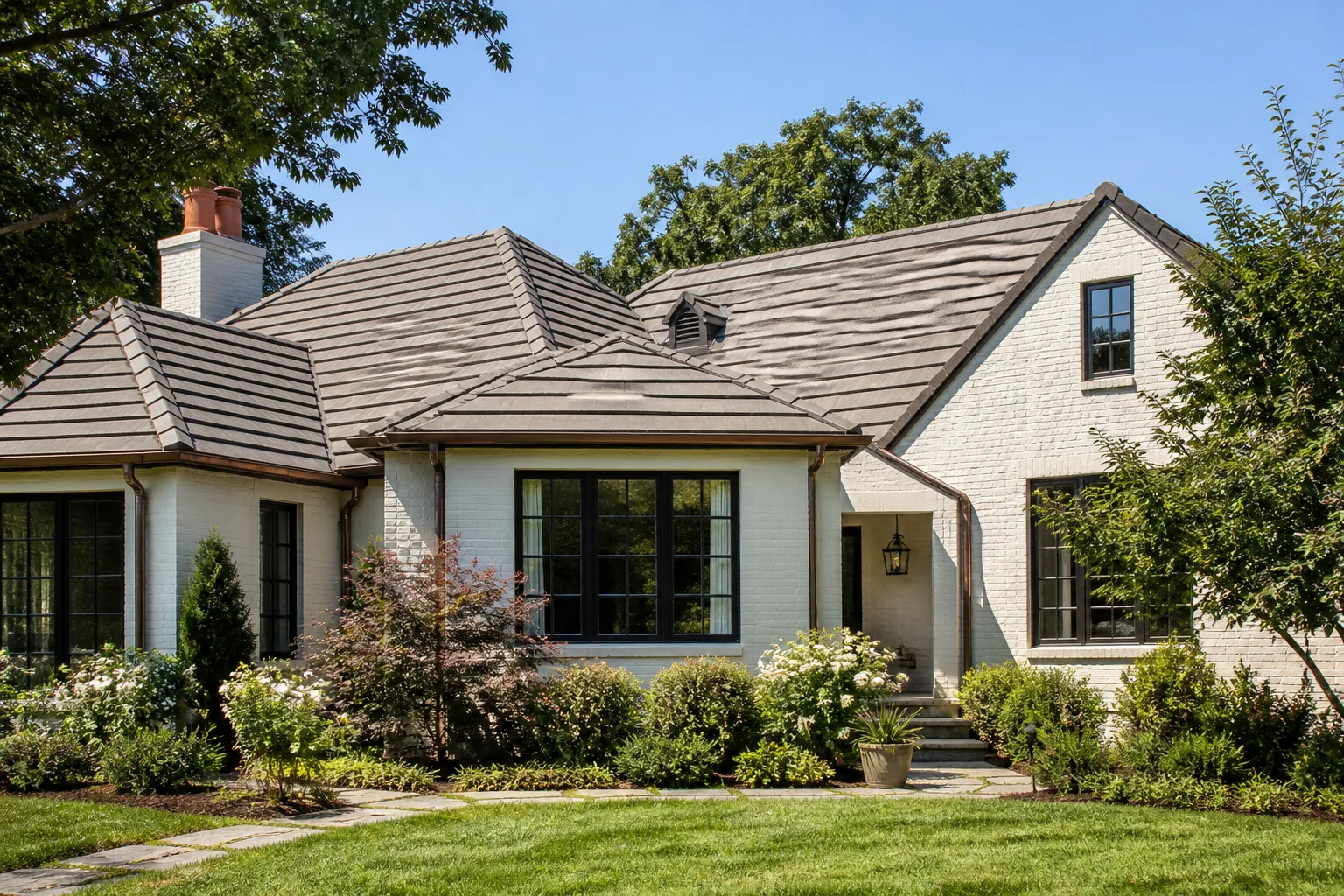
- Tile roofing
- GAF
- Owens Corning
- Flat & low-slope
Table of Contents
- How Bellevue’s Climate Reshapes Material Selection
- Asphalt, Tile, or Metal? A Bellevue Comparison
- HOA Architectural Standards in Bellevue Neighborhoods
- Bellevue Permits and Inspection Timelines
- Why Ventilation Decides Your Roof’s Lifespan
- What a Bellevue Roof Replacement Actually Involves
- Brands, Warranties, and Why Sourcing Matters
- What Drives Cost in Bellevue
How Bellevue’s Climate Reshapes Material Selection
Bellevue averages about 37 inches of rain a year, but the volume isn’t the problem – the pattern is. Rain here tends to arrive as sustained drizzle spread across many days rather than short, violent storms. That means water sits on the roof surface and seeps at the edges longer. It gives slow leaks time to develop behind flashing, under valleys, and along the eaves, and it keeps the roof deck damp in a way a fast-drying climate never does.
Compare Bellevue to an inland city like Spokane. Spokane gets its moisture differently – more concentrated storms, more snowpack, dry summers, and sharper temperature swings. A roofing system that performs well there prioritizes impact resistance and snow load. In Bellevue, the priority flips to continuous moisture management: underlayment quality, ice-and-water shield placement, and a ventilation design that lets the attic breathe through the wet season.
There’s a second Bellevue-specific factor: elevation and microclimate. Neighborhoods on the higher ground to the east see more freeze-thaw cycling than the lower, closer-in parts of the city. Every freeze-thaw cycle expands and contracts the roofing system slightly, working at seams, fasteners, and sealants. Over enough winters, that cycling is what ages a roof as much as the rain does.
What this means for your material choice
- Moisture tolerance matters more than impact rating. A material that handles steady damp and sheds water cleanly beats one built for hail that rarely comes.
- Freeze-thaw resistance favors systems with fewer moving seams. Metal panels and well-installed tile handle thermal movement well; shingle relies on quality underlayment and proper nailing.
- Ventilation is not optional here. The wet season punishes any roof that traps moisture in the attic.
In our experience, the Bellevue homeowners who get the longest life out of a new roof are the ones who treat the roof as a system – deck, underlayment, ventilation, and material together – rather than shopping for a shingle color and calling it done.
Asphalt, Tile, or Metal? A Bellevue Comparison
There’s no single best material for Bellevue. Each of the three main residential systems solves a different problem, and the right answer depends on your roof’s pitch, your budget, your HOA, and how long you plan to stay. Here’s how they stack up against the conditions this city actually produces.
| Factor | Asphalt Shingle | Tile | Metal |
|---|---|---|---|
| Wet-season performance | Good with quality underlayment | Excellent – sheds water cleanly | Excellent – fast runoff |
| Freeze-thaw tolerance | Moderate | High | High |
| Weight | Light – fits most structures | Heavy – may need structural review | Light |
| HOA acceptance | Widely accepted | Accepted in specific neighborhoods | Varies by association |
| Best fit for home value bracket | Most Bellevue homes | Higher-value, architecturally controlled homes | Mid-to-higher value, modern or long-hold homes |
| Maintenance profile | Periodic inspection and resealing | Occasional cracked-tile replacement | Minimal |
Asphalt shingle
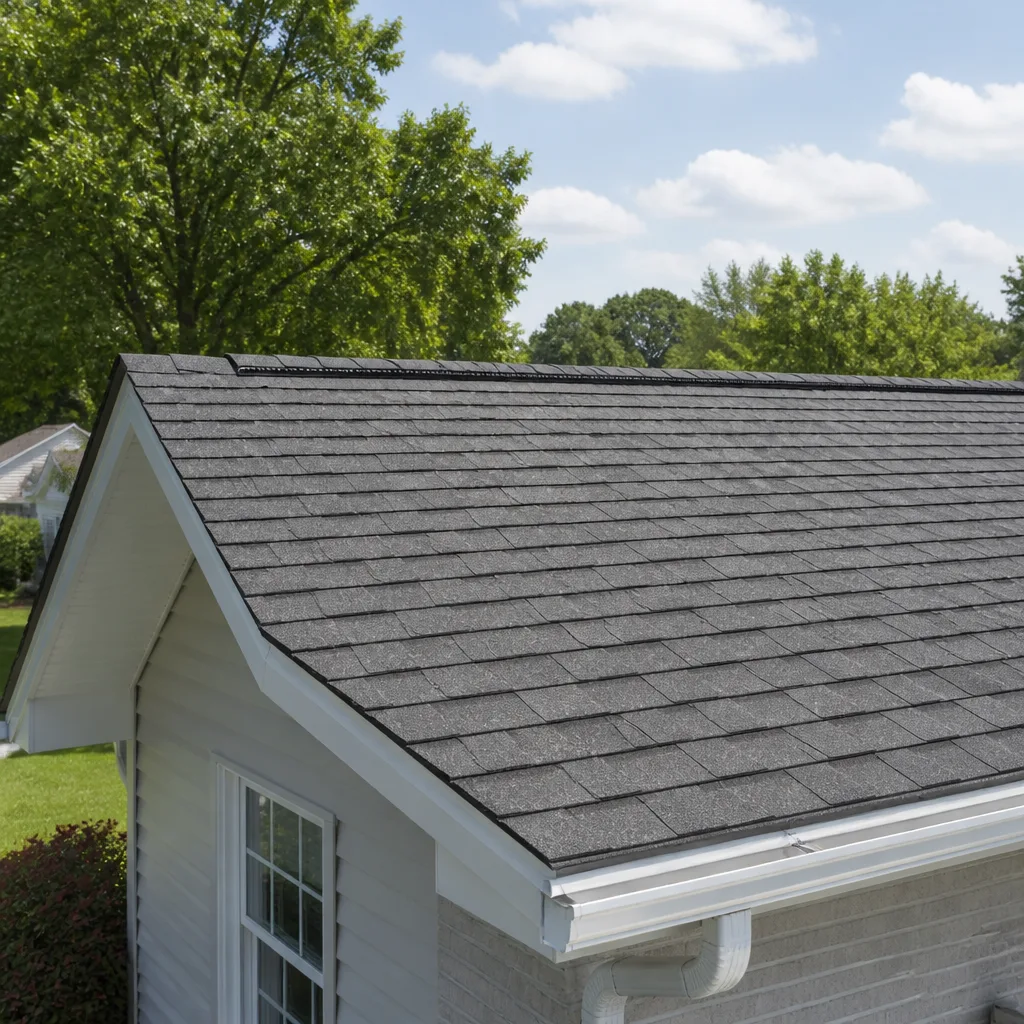
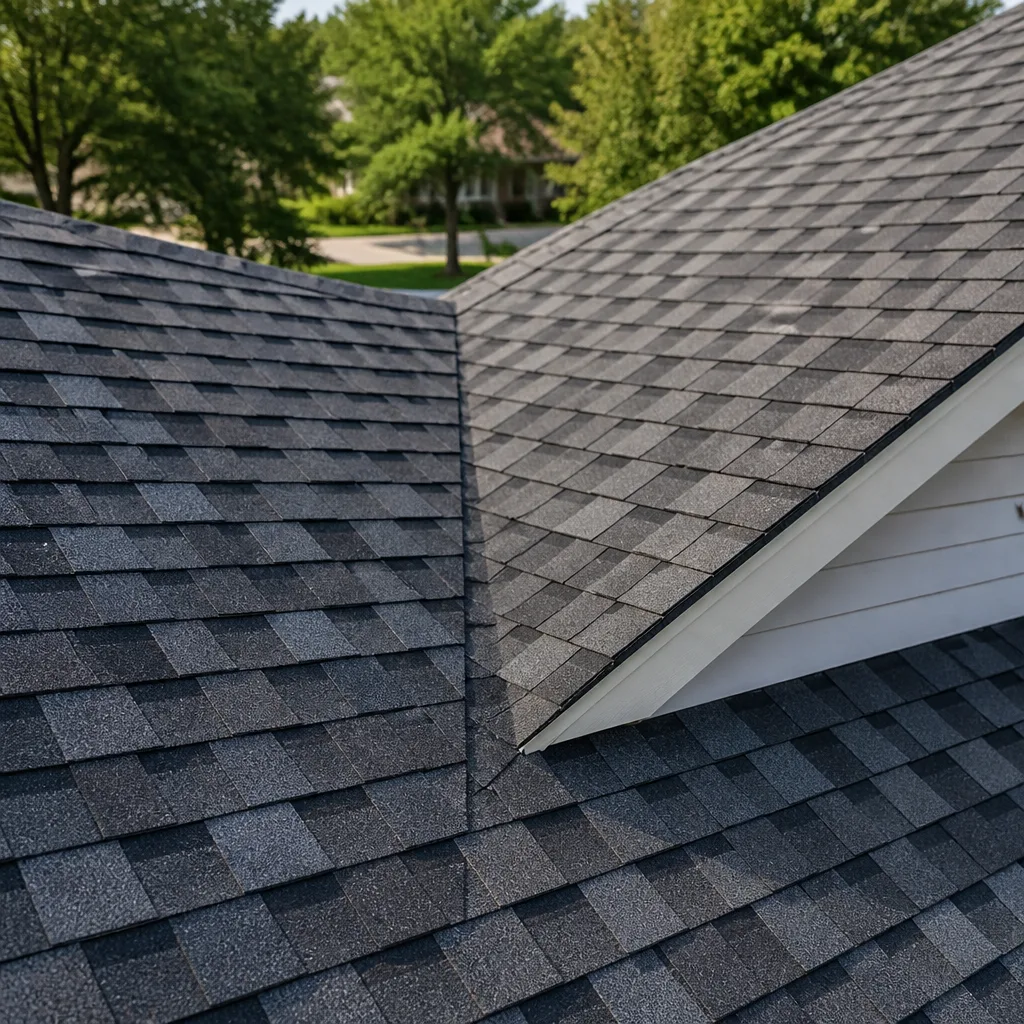
Asphalt shingle is the workhorse of Bellevue roofs, and for good reason. It’s light enough for nearly any structure, it installs cleanly on the moderate pitches common across the city, and it clears most HOA standards without a fight. The catch is underlayment: in a wet climate, the shingle is the visible layer but the underlayment beneath it is doing heavy lifting. Cheaper installs that skimp on underlayment are where shingle roofs fail early.
Tile
Tile is common in Bellevue’s more architecturally controlled neighborhoods and higher-value homes. It sheds water exceptionally well and handles thermal movement without much complaint. The trade-off is weight – a tile roof may require a structural review before installation – and cost. Tile also needs proper underlayment underneath, so the same ventilation and moisture rules apply.
Metal
Metal roofing has gained ground in Bellevue for homeowners planning to stay long-term. It moves water fast, tolerates freeze-thaw cycles, and holds up with minimal maintenance. HOA rules sometimes restrict visible metal, so check before you commit. For the right home, it’s a durable, low-fuss system.
We install all three – asphalt shingle, tile, and metal – so our recommendation follows your roof and your goals rather than what any single specialist happens to sell. If you want to start closer to the ground, our guide to shingle roofing breaks down the most common path in detail.
HOA Architectural Standards in Bellevue Neighborhoods
Bellevue has a lot of planned communities and homeowner associations, and architectural review is a real gate on what you can install. This is the factor most national guides skip entirely. You can pick the perfect material and still get stopped at the association review if the color, profile, or material isn’t approved for your neighborhood.
How the approval process usually runs
- Request your association’s architectural guidelines. Ask specifically which roofing materials and color palettes are pre-approved.
- Submit your material and color selection for review. Many associations require manufacturer specification sheets or samples.
- Get written approval before ordering materials. Verbal go-aheads cause problems later.
- Schedule the work only after approval is documented. This keeps the install and the association in sync.
Approval rates by material aren’t uniform. Asphalt shingle in a neutral palette clears most associations without difficulty. Tile is accepted in a number of the higher-value, architecturally controlled neighborhoods, but usually with color and profile requirements. Metal is where approval gets uneven – some associations welcome it, others restrict visible metal roofing on street-facing elevations.
The practical move: pull your HOA guidelines first, then choose material. Choosing first and asking forgiveness later is how homeowners end up re-roofing twice. If your home is new construction, review standards with your builder early so the material is baked into the plan rather than retrofitted around it.
Bellevue Permits and Inspection Timelines
A roof replacement in Bellevue typically requires a permit through City of Bellevue Building Services, and the permit covers the structural and code side of the work. The application usually needs the scope of work, the roofing material and system being installed, and sometimes a structural review if the new roof adds significant weight, such as with tile.
What the permit process generally looks like
- Verify current requirements with City of Bellevue Building Services. Rules can shift, so confirm the specific permit classification for your project before applying.
- Submit the application with the scope and materials. This is where tile roofs or unusual systems may trigger extra review.
- Schedule the inspection stages. Inspections usually cover the deck and underlayment stage and the finished roof stage.
- Pass final inspection before the job is closed out. A good contractor builds inspection timing into the schedule so there are no last-minute surprises.
Inspection timelines vary with the city’s workload and the complexity of the roof, so build a realistic window around them rather than expecting a single-day turnaround. A contractor who pulls the permits and plans for inspections up front is protecting you from a job that stalls at the final stage.
Permits and inspections are one of the questions to ask before you hire anyone. Ask whether the contractor pulls the permit in their name and how they handle inspection scheduling. The estimate and permit scope should match, line for line, so there’s no gray area once work begins.
Why Ventilation Decides Your Roof’s Lifespan
Here’s the point that gets buried in most roofing marketing: the shingle brand matters less than the ventilation design. A Bellevue roof that can’t move moisture out of the attic will fail early no matter what’s on top. The wet season keeps the deck damp, and without proper intake and exhaust airflow, that moisture condenses, feeds wood rot, and shortens the life of every component above and below it.
Low-pitch roof sections are the hardest case. Water and air move more slowly on a shallow slope, and ventilation designs that work on a steep roof can underperform on a low one. Bellevue has plenty of homes with low-pitch sections over porches, additions, and garages, and those sections need ventilation designed for the specific slope rather than a one-size layout.
What proper ventilation includes
- Balanced intake and exhaust. Air needs a clear path in at the eaves and out near the ridge.
- Coverage matched to the roof area. Under-ventilated attics trap moisture; the balance needs to be calculated, not guessed.
- Low-pitch-specific solutions. Shallow sections may need different venting than the main roof.
- Deck inspection before underlayment goes down. Any soft or rotting decking gets replaced while the roof is open.
This is why we tell Bellevue homeowners to ask a prospective contractor how they’ll handle ventilation before they ask about shingle color. A roofer who can explain the airflow design for your specific roof – including the low-pitch parts – is thinking about lifespan. One who can’t is selling a surface.
What a Bellevue Roof Replacement Actually Involves
A roof replacement is a full tear-off and rebuild of the roof system. That means the old material comes off, the deck gets inspected and repaired, new underlayment goes down, flashing and ventilation are set, and the finished material is installed in stages. A roof replacement done right is a sequence of steps, each one inspected before the next begins.
The typical sequence
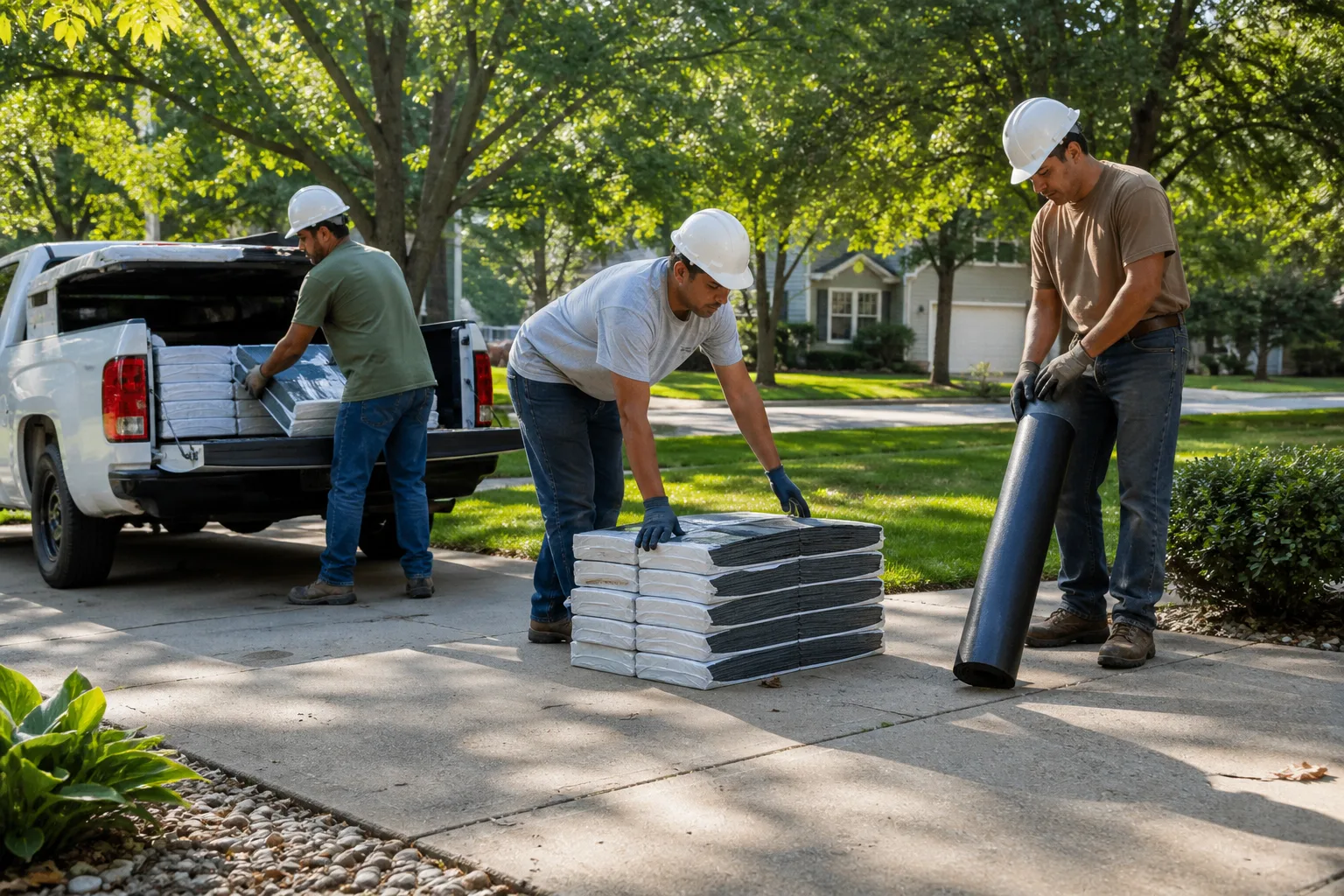
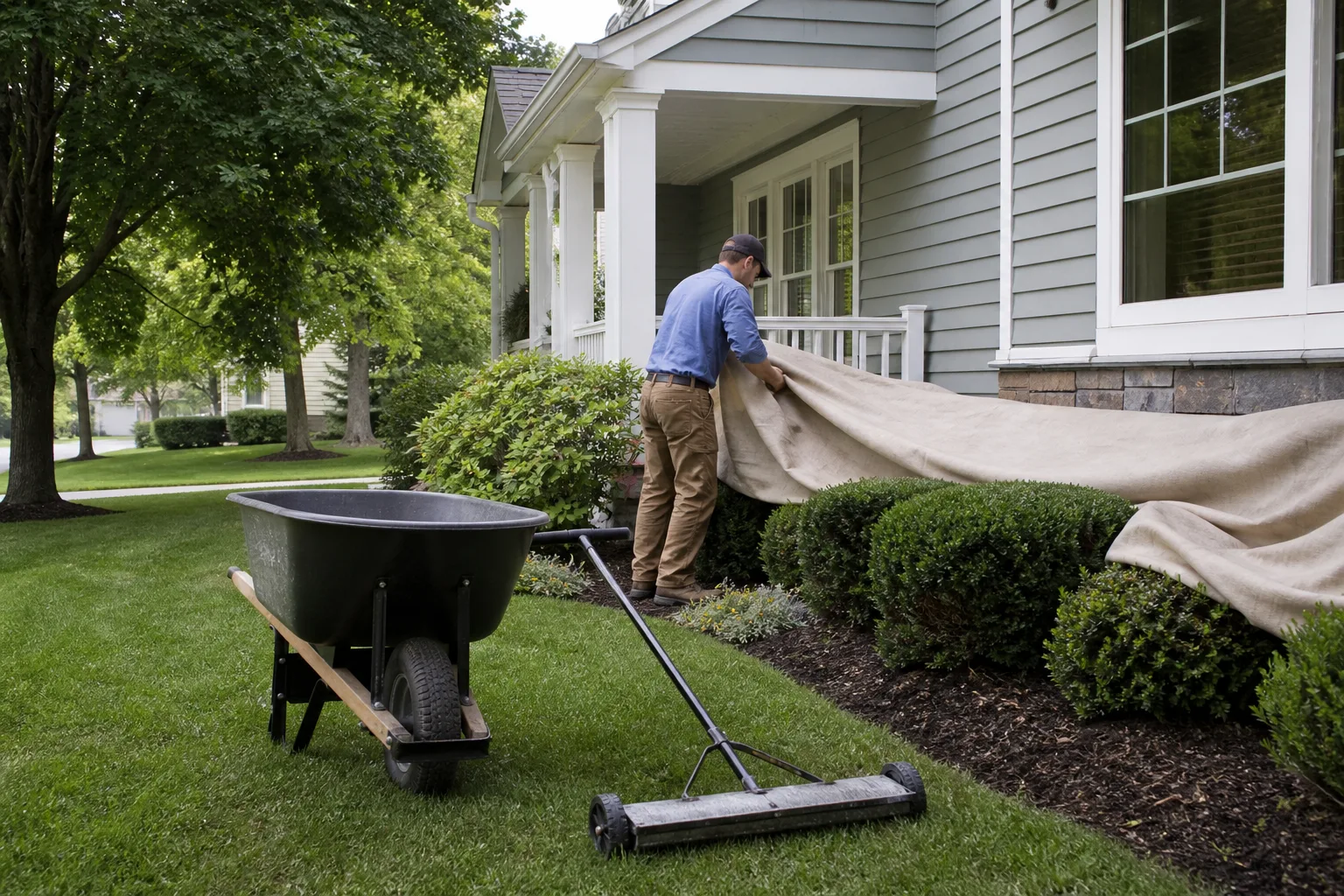
- Site protection and tear-off. The old roofing material is removed, and the deck is exposed for inspection.
- Deck inspection and repair. Soft, rotted, or damaged decking is replaced before anything else goes on.
- Underlayment and ice-and-water shield. The moisture barrier is installed, with extra protection at valleys, eaves, and vulnerable points.
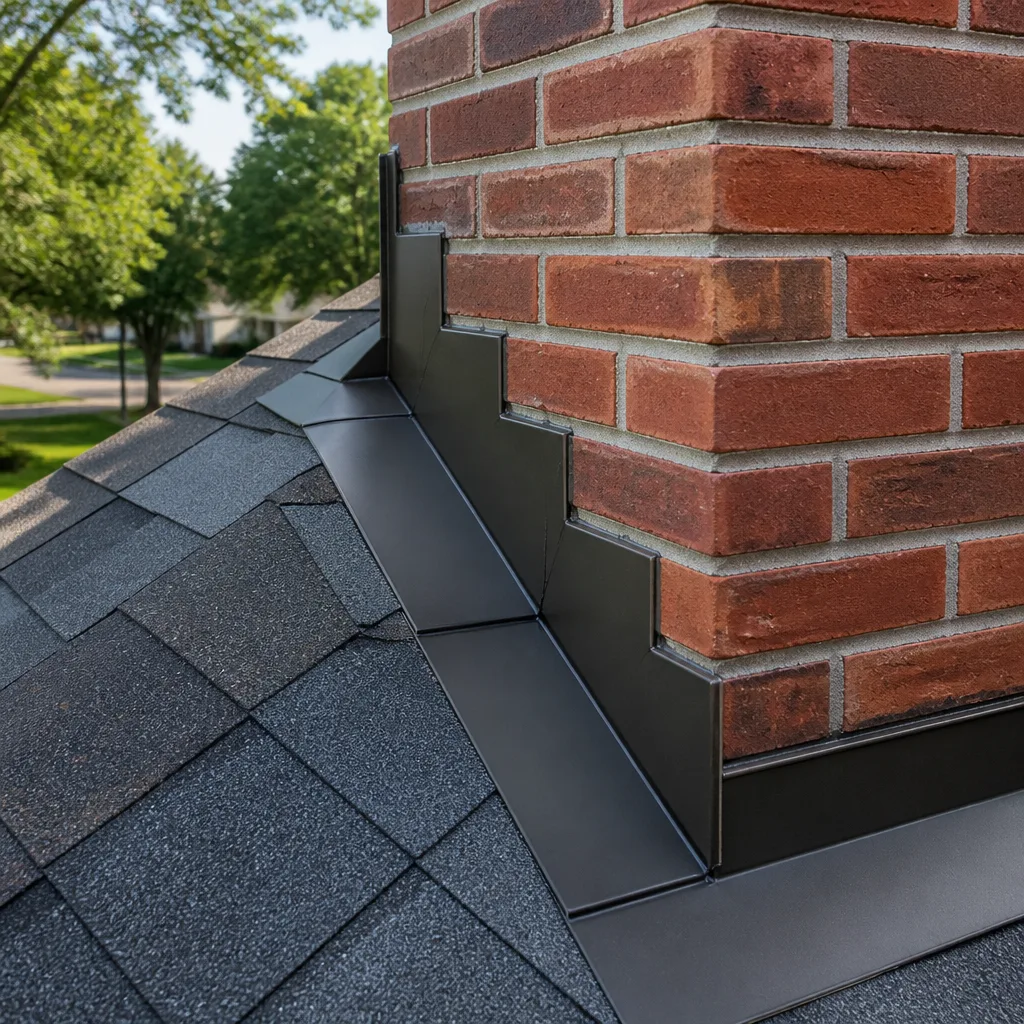
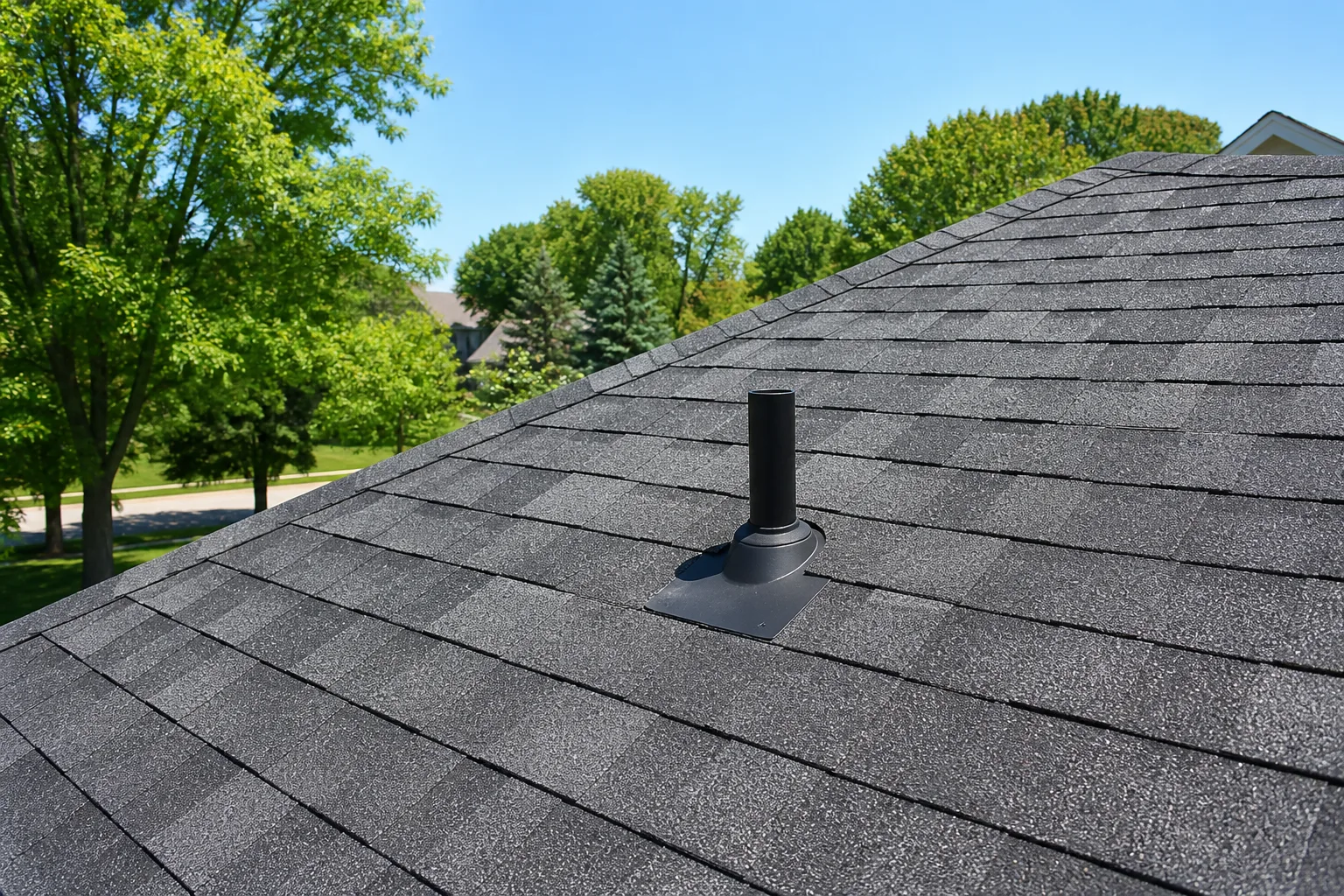
- Flashing and ventilation. Flashing at walls, chimneys, and penetrations is set, and the intake and exhaust vents are configured.
- Finished roofing material. The shingle, tile, or metal system is installed per the manufacturer’s requirements.
- Inspection and cleanup. The work is inspected and the site is cleared.
Because we install all three materials, the sequence adjusts to the system you choose – tile adds weight and handling considerations, metal adds panel layout and fastener detail, shingle is the fastest path. What doesn’t change is the underlayment and ventilation work underneath. Our roof replacement page covers the process in more depth for the most common scenario.
For homes still under construction or building an addition, the sequence shifts slightly because there’s no tear-off stage. A new roof installation starts with the bare deck and builds up from there, with the same material and ventilation decisions – just without the removal work.
Brands, Warranties, and Why Sourcing Matters
Manufacturer warranties are one of the most misunderstood parts of a roof replacement. Many top-tier manufacturers offer their strongest warranties only when the product is installed by an authorized installer, through a network they control. That means the brand name on a shingle isn’t the credential – the installer’s authorization is what unlocks the warranty coverage.
We work with seven manufacturer brands, including GAF, CertainTeed, Owens Corning, IKO, Atlas, Tamko, and Boral. That breadth matters for two reasons. First, it means we can match a product to your roof, budget, and HOA needs instead of steering you toward whatever one brand offers. Second, it gives you real options: if one manufacturer’s profile fits your low-pitch section better than another’s, we can source it. A single-brand shop can’t do that without driving you toward a compromise.
What to ask about brands and warranties
- Is the installer authorized to install this brand, so the manufacturer warranty applies?
- Which warranty tier applies to the specific product and installation method?
- What does the warranty cover – materials, labor, or both?
- Are the product specifications documented for your HOA review?
Our technicians have up to 8 years of experience across these systems, which helps when a roof has quirks – an odd pitch, an unusual flashing detail, an old deck that needs more repair than expected. We specialize in roofing only, so that knowledge stays focused on roofs rather than spread across other trades. See who we are on our main Roofing Bellevue Pros page.
What Drives Cost in Bellevue
Roof replacement pricing in Bellevue is set per job by a written estimate, and the final number depends on the specifics of your roof rather than a per-square-foot formula you can pull off a website. The estimate should itemize what’s included, so there’s no ambiguity once work starts.
What goes into a Bellevue roof estimate
- Roof size and complexity. Multiple planes, valleys, and penetrations take more labor and more material.
- Material choice. Asphalt shingle, tile, and metal have different material and installation costs.
- Deck repair. If soft decking is found during tear-off, it’s replaced – good estimates account for this, not hide it.
- Ventilation work. Proper intake and exhaust, especially on low-pitch sections, is a real line item.
- Permit and inspection costs. These are included in a proper written estimate.
- HOA requirements. Color or profile constraints can affect what’s available and the associated cost.
Ask for a written, line-item estimate and confirm it includes deck repair scope, ventilation work, permits, and materials by brand and product line. When the price is set by that written estimate before work begins, there’s no change-order surprise once the tear-off starts. The free estimate is where scope and price get locked in, so get one before you commit.
Common Mistakes to Avoid
- Choosing material before checking your HOA guidelines. In Bellevue’s planned communities, the association can veto a color or material after you’ve already ordered. Pull the guidelines first and get approval in writing.
- Treating the roof as shingle-only. The underlayment, flashing, and ventilation are what make the roof last in this climate. A cheap install that skips proper underlayment fails early.
- Skipping the deck inspection. If soft decking is covered over instead of replaced, the new roof inherits the problem. The deck gets inspected during tear-off for a reason.
- Ignoring low-pitch sections. A Bellevue roof with low-pitch areas needs ventilation designed for that slope. Standard layouts can underperform there, and that’s where water hangs.
- Assuming the brand name alone unlocks the warranty. Many strong manufacturer warranties require an authorized installer. Ask before you hire.
- Accepting a verbal estimate. A written, line-item estimate protects you if scope questions come up later. Verbal numbers are where surprises start.
- Skipping the permit. Bellevue roof replacements typically require a permit, and inspections are part of the process. A contractor who doesn’t pull one leaves you exposed at resale.
See the difference
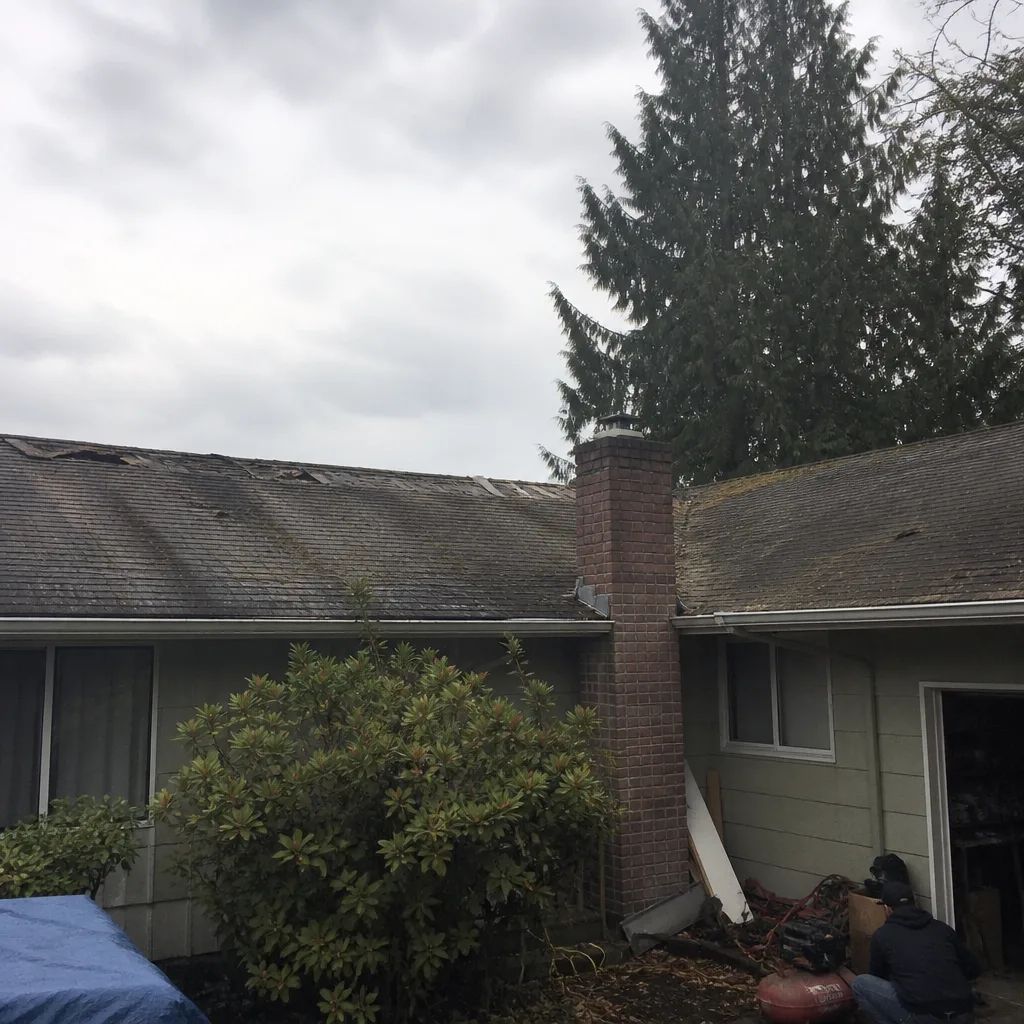 Before
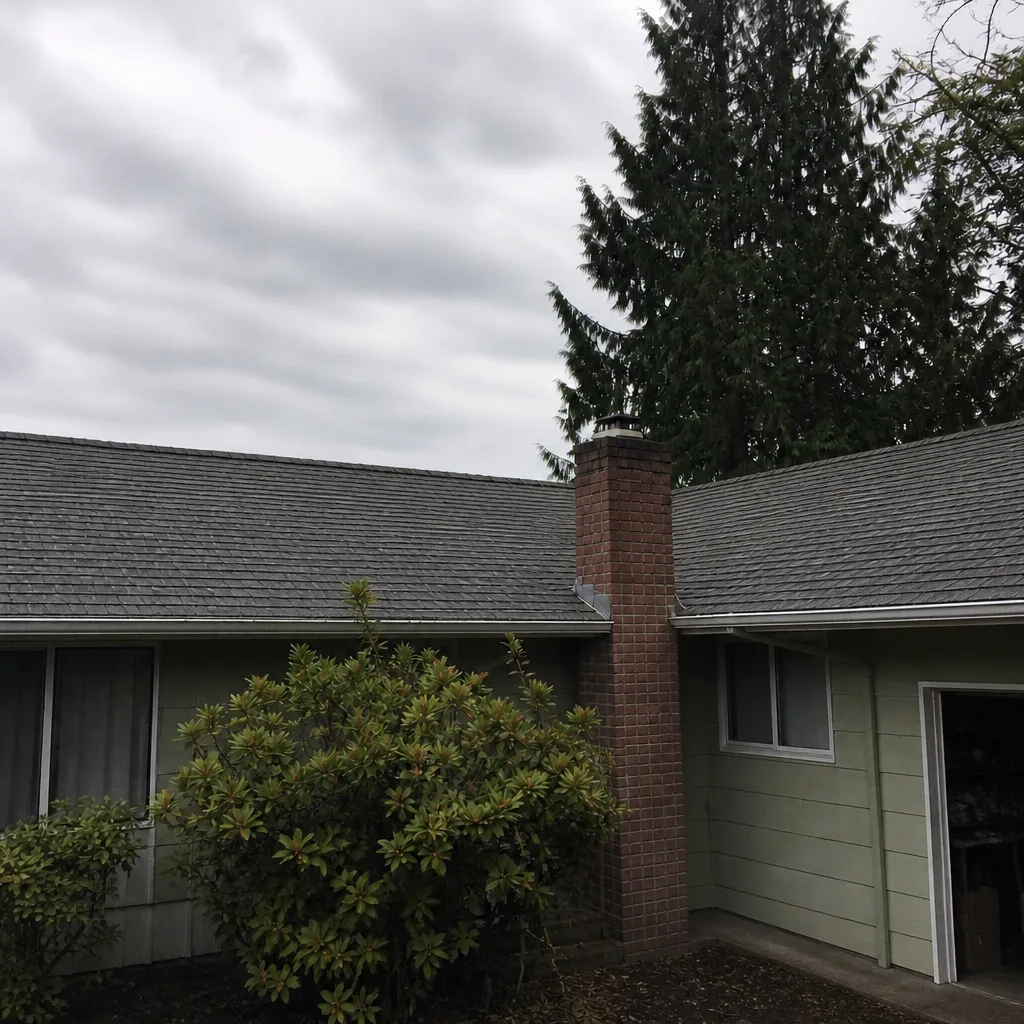 After
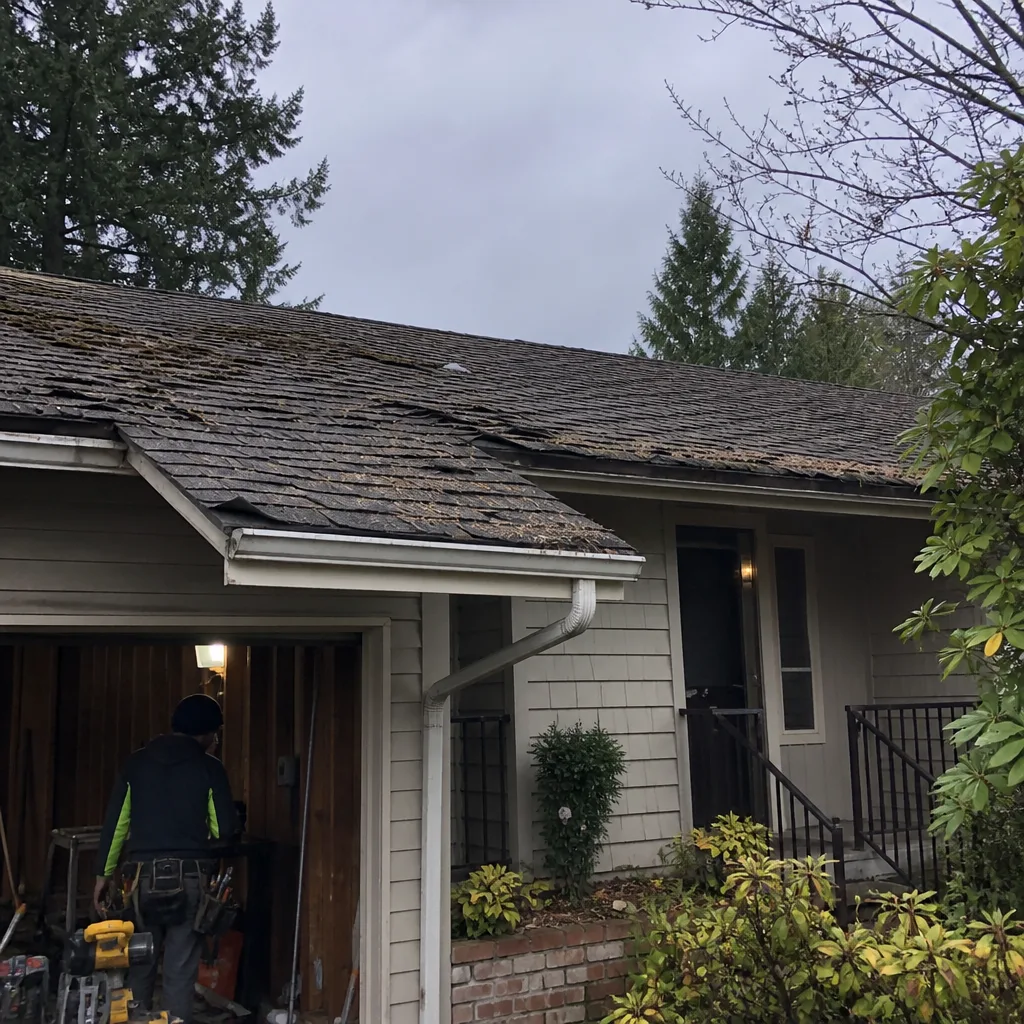 Before
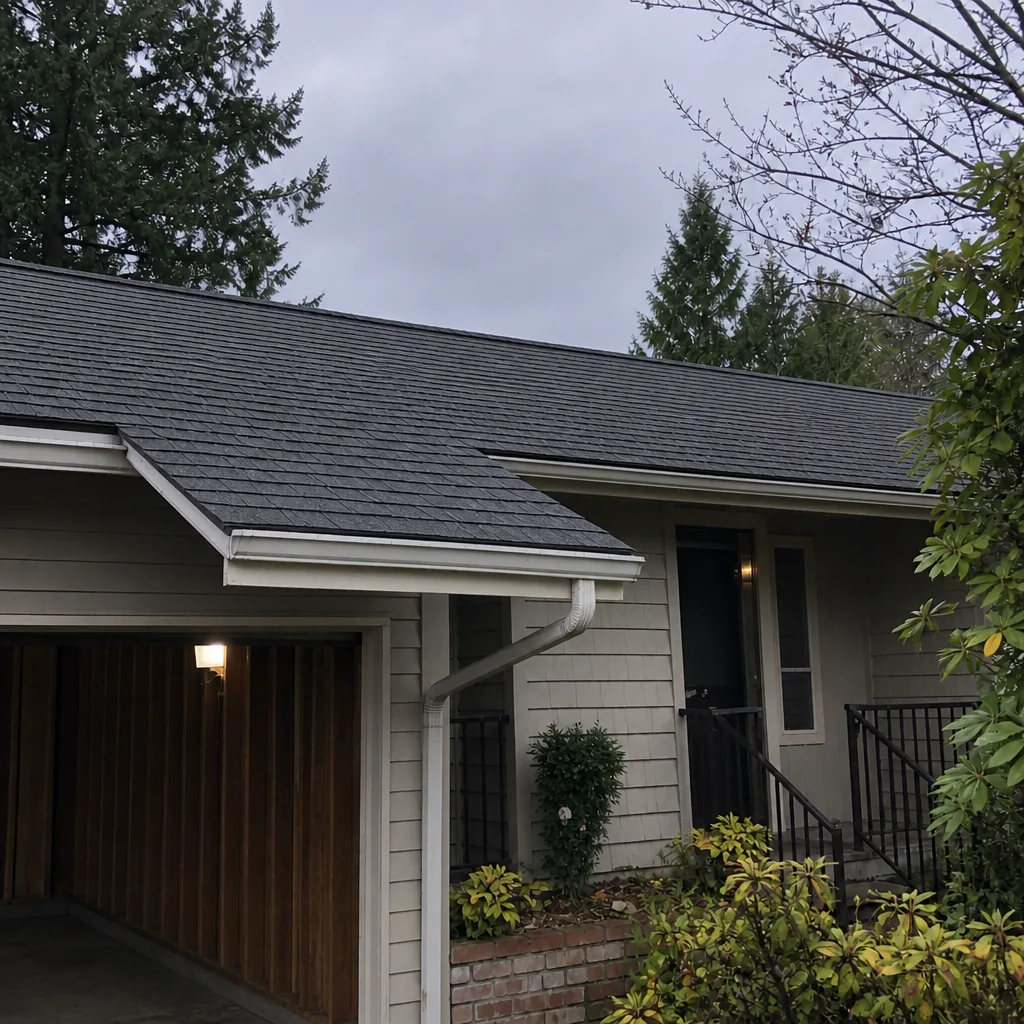 After
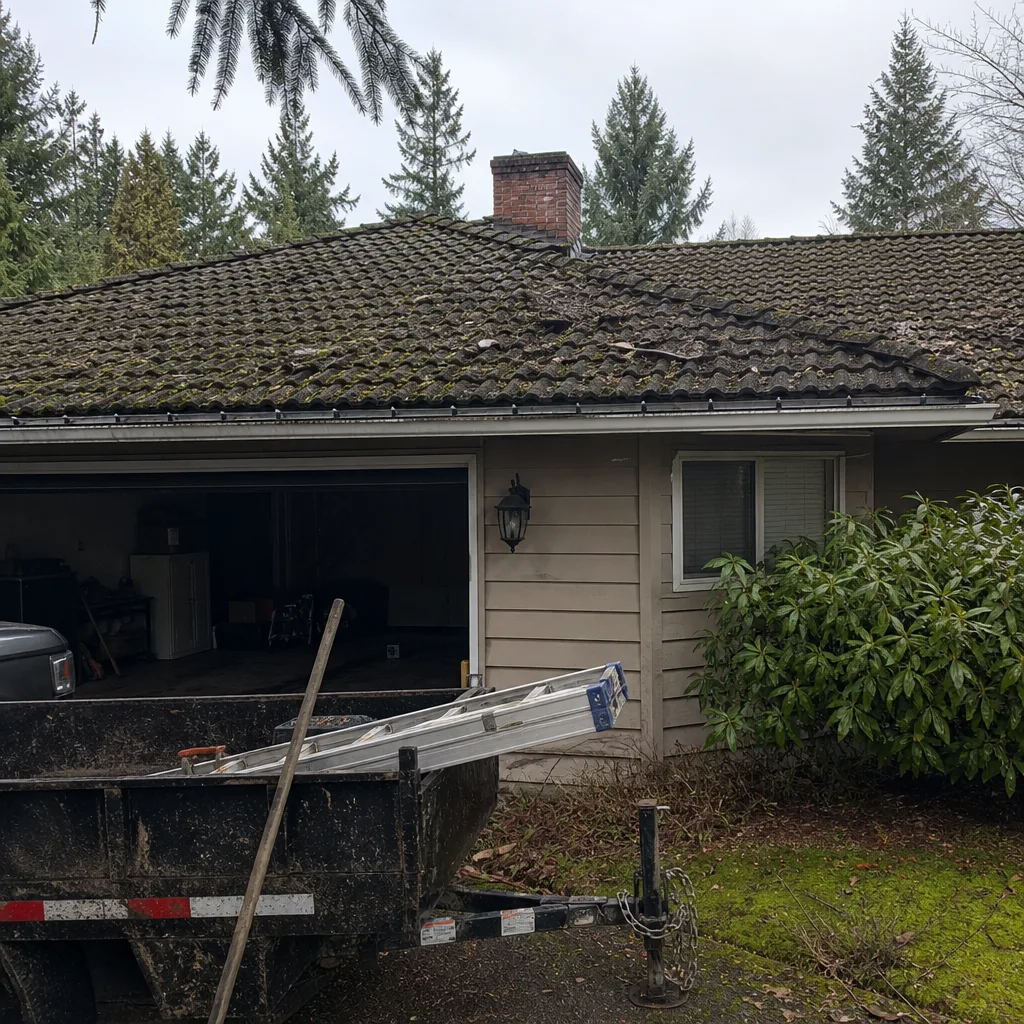 Before
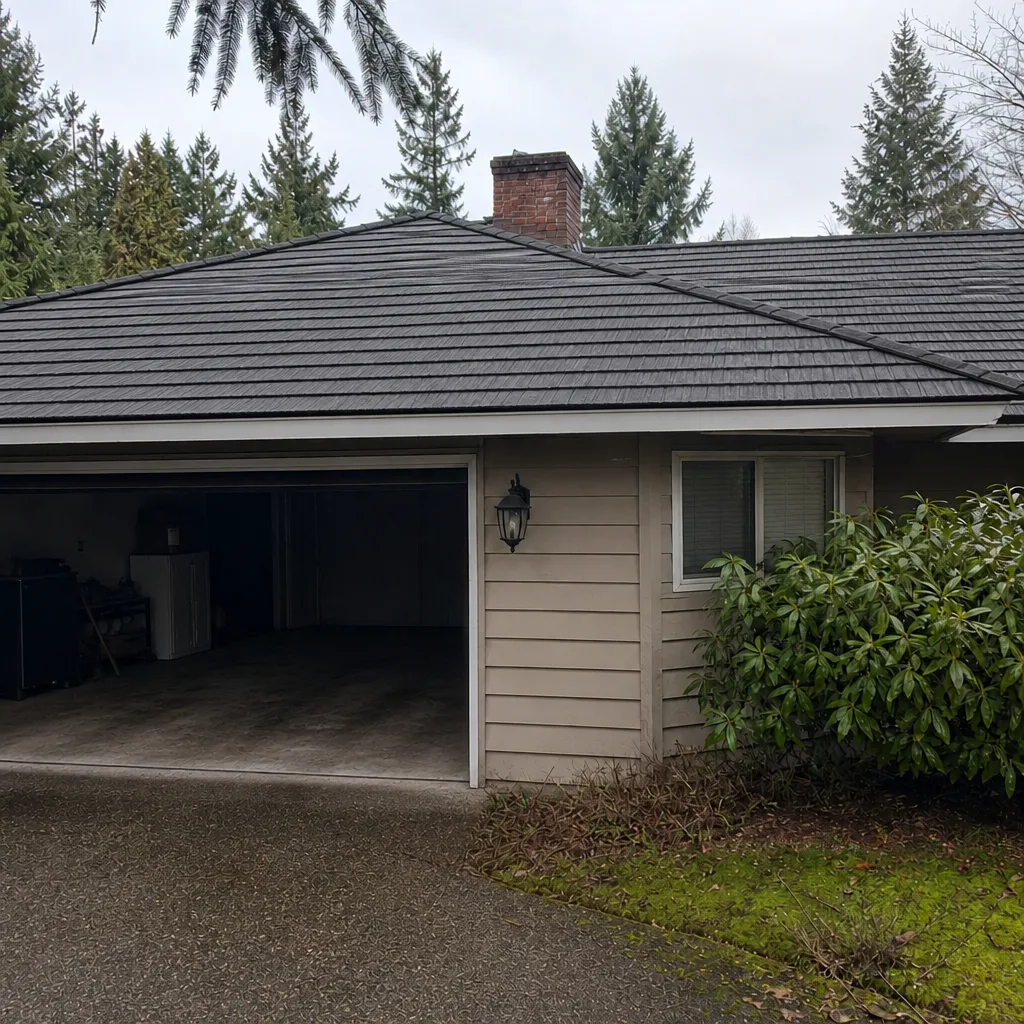 After
When to Call a Professional
A roof replacement isn’t a DIY project, and some situations need a professional sooner than others. Call when you see water stains on ceiling boards or along the walls near the roofline, when attic ventilation feels wrong or the attic stays damp, when the roof surface shows curling, missing, or cracked material, or when the roof is at the end of its expected life and a replacement is coming up. Call before you order materials for a new build, too – material and HOA decisions get harder once the deck is framed. High areas and roof surfaces are dangerous to work on, and roofing systems involve structural, moisture, and ventilation decisions that go wrong quietly when they go wrong. Roofing Bellevue Pros offers free estimates in Bellevue – call (425) 699-1466. We answer 24/7. Fast dispatch from 7am to 7pm, Sunday through Friday.
Frequently Asked Questions
The cost is set per job by a written estimate, because it depends on roof size, material, deck condition, and ventilation work. Bellevue roofs with low-pitch sections and HOA requirements can carry additional scope. Call (425) 699-1466 for an exact quote – estimates are free.
A typical Bellevue roof replacement takes a matter of days to a couple of weeks depending on roof size, material, and inspection timing, but we set a realistic schedule with your written estimate rather than a generic promise. Permit and inspection windows through City of Bellevue Building Services can add time. Call (425) 699-1466 to plan yours.
Yes – a roof replacement in Bellevue typically requires a permit through City of Bellevue Building Services, and inspections are part of the process. Confirm the current requirements before you apply, since rules can shift. The estimate should include the permit and inspection costs – call (425) 699-1466 to talk it through.
There’s no single best material – asphalt shingle suits most Bellevue homes, tile fits specific higher-value and architecturally controlled neighborhoods, and metal works well for long-term homeowners. Climate-wise, all three perform well when underlayment and ventilation are done right. Call (425) 699-1466 and we’ll walk you through the trade-offs for your roof.
It depends on the association and the neighborhood – asphalt shingle clears most associations, tile is accepted in certain architecturally controlled areas, and metal approval varies. Get your association’s written guidelines and submit your selection for review before ordering. Call (425) 699-1466 for help with documentation.
Soft or rotted decking is replaced during tear-off, since a roof installed over a failing deck inherits the problem. A good written estimate accounts for deck repair scope rather than hiding it. Call (425) 699-1466 and we’ll explain how we handle deck work on your roof.
The Bottom Line
A Bellevue roof replacement is a system decision, not a shingle decision. The climate here – steady drizzle, freeze-thaw cycling, and a long wet season – punishes roofs that trap moisture and rewards installs with proper underlayment and ventilation. Your material choice comes down to asphalt shingle, tile, or metal against your roof’s pitch, your home value bracket, and your HOA’s standards. Get a written, line-item estimate that includes the deck, the ventilation, and the permit, and confirm your material and color are approved before anything is ordered. We install all three materials and source from seven manufacturer brands, so the recommendation follows your roof rather than what’s on a shelf.
We answer 24/7. Fast dispatch from 7am to 7pm, Sunday through Friday. Call (425) 699-1466 for a free estimate, and we’ll put the scope and price in writing before any work begins.
Written by the team at Roofing Bellevue Pros.